A leaking roof is one of the few home problems that gets dramatically more expensive the longer it is left. What starts as a damp ring on the ceiling becomes soaked insulation, sagging plasterboard and rotten timber if the water keeps coming. The good news is that most leaks trace back to a handful of common, fixable faults, and caught early the repair is usually small. This guide covers what causes a roof to leak, how we find the source, and what to do the moment you notice one.
We are a family-run team across Milton Keynes and Newport Pagnell, and leaks are what we are called out to most, especially once the autumn and winter weather sets in. Here is what we look for.
What to do the moment you spot a leak
Before anything else, limit the damage. A few minutes now can save a whole ceiling later.
- Catch the water. Put a bucket or bowl under the drip and lay towels around it. If the ceiling is bulging with trapped water, piercing it with a small screwdriver lets it drain in one controlled spot rather than bringing the whole ceiling down.
- Move or cover what matters. Shift furniture, electricals and anything of value clear of the area.
- Mind the electrics. If water is anywhere near a light fitting, downlight or socket, switch that circuit off at the consumer unit and leave it off until everything is dry.
- Take photographs. Dated photos of the leak and any damage matter if you end up making an insurance claim.
- Stay off the roof. Never climb up to look, particularly in wet or windy weather. Call an insured roofer, who will make the roof watertight first and then sort the permanent repair.
Why a leak rarely appears where the water gets in
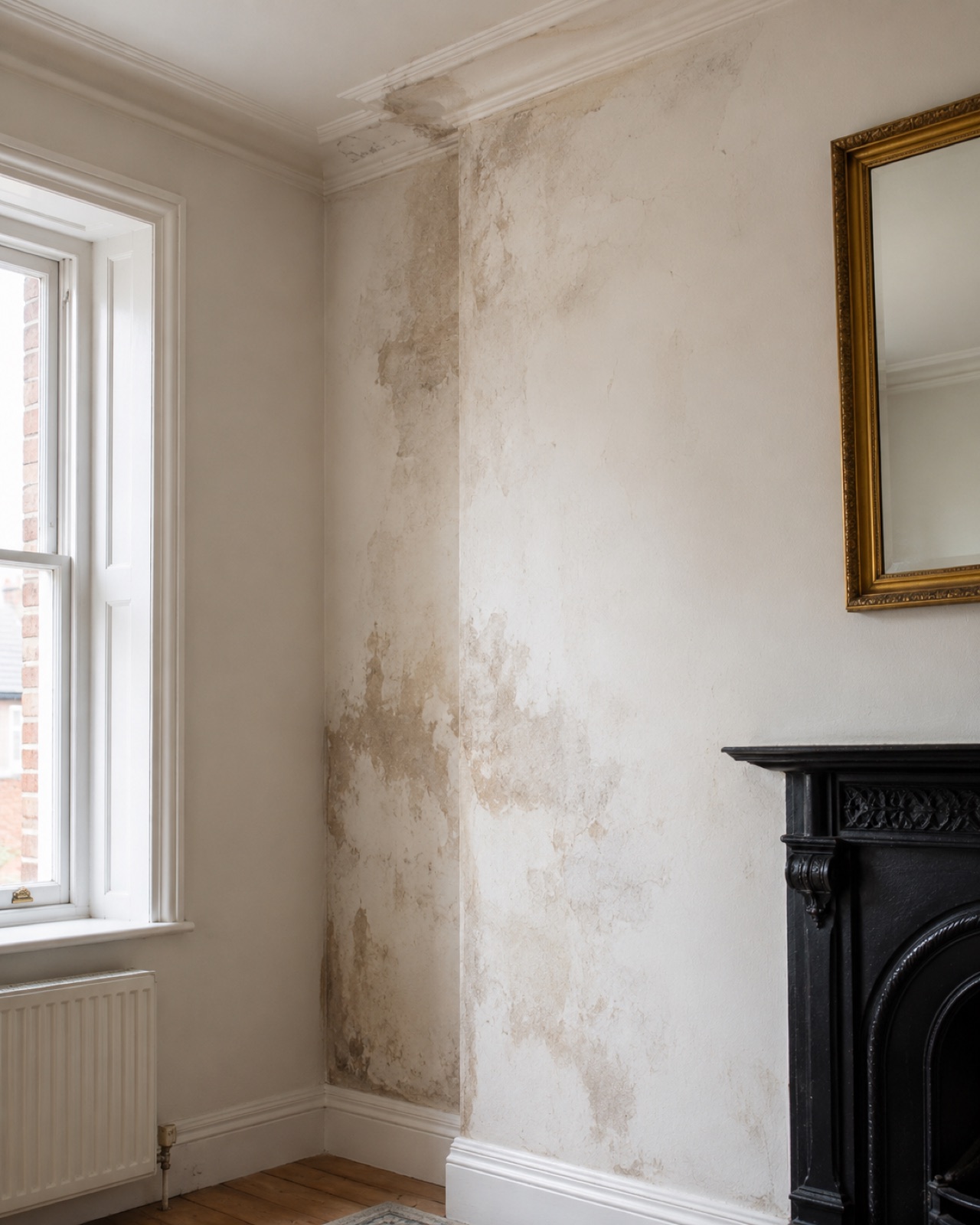
This is the single most important thing to understand about a roof leak. Water enters at a fault, then runs along the underside of the underlay, down a rafter or across a ceiling joist before it finally drips through and shows as a stain. The damp patch can be a metre or more from the actual hole, and often on the other side of the room. It is why chasing the stain rarely works, and why finding the true source is the skilled part of the job.
The most common causes of a roof leak
Nine times out of ten, a leak comes from one of these.
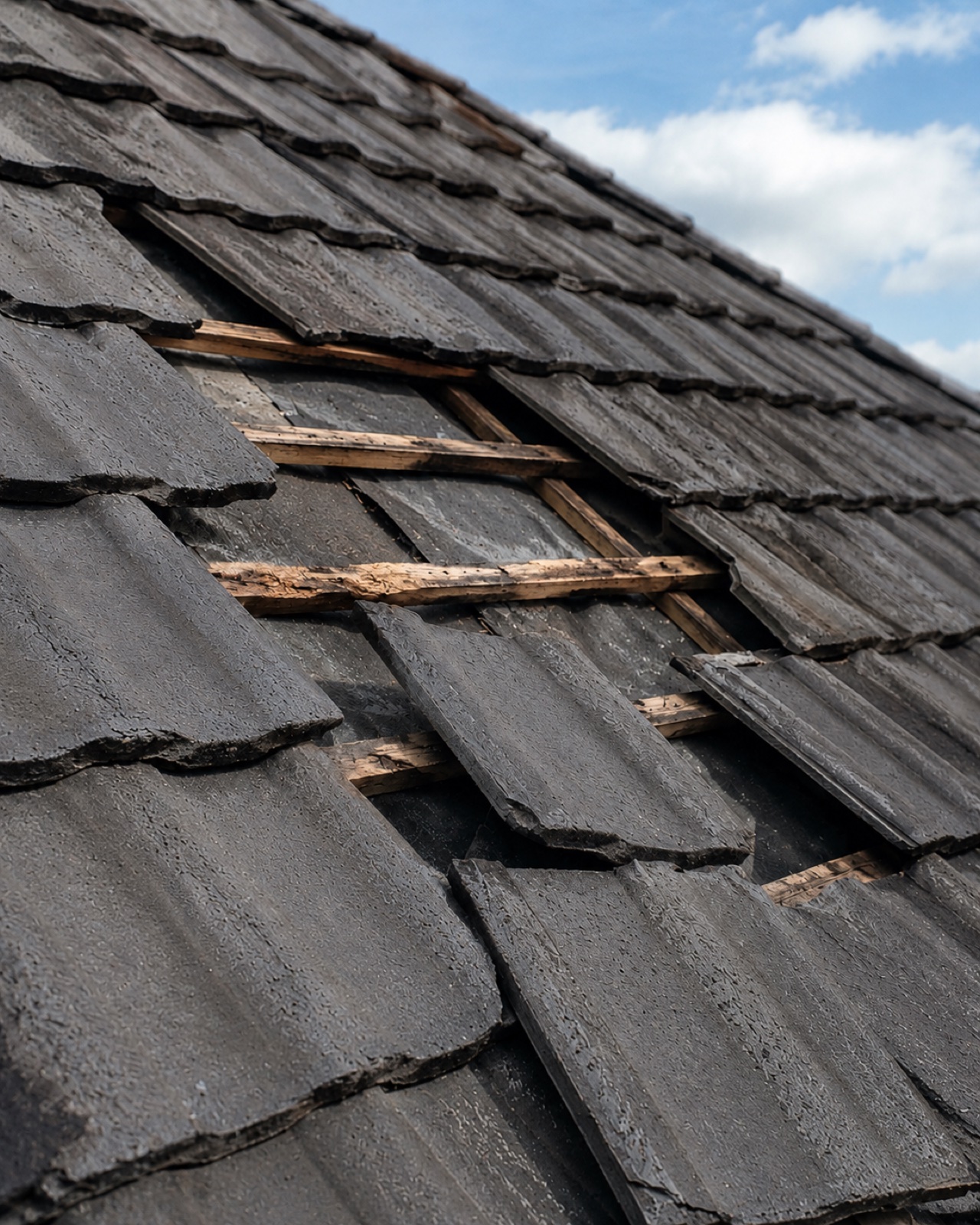
Slipped, cracked or missing tiles
The most common cause of all. A single tile out of place leaves the underlay exposed, and underlay is a backup layer, not a permanent waterproof one. Wind, frost and age all work tiles loose over time. Replacing a slipped tile early is a quick, inexpensive job.
Failed lead flashing
The lead that seals around chimneys, and where a lower roof meets a wall, lifts, splits or pulls away over the years. Once it does, wind-driven rain gets straight behind it. Flashing is behind a large share of the leaks we trace, especially around chimneys.
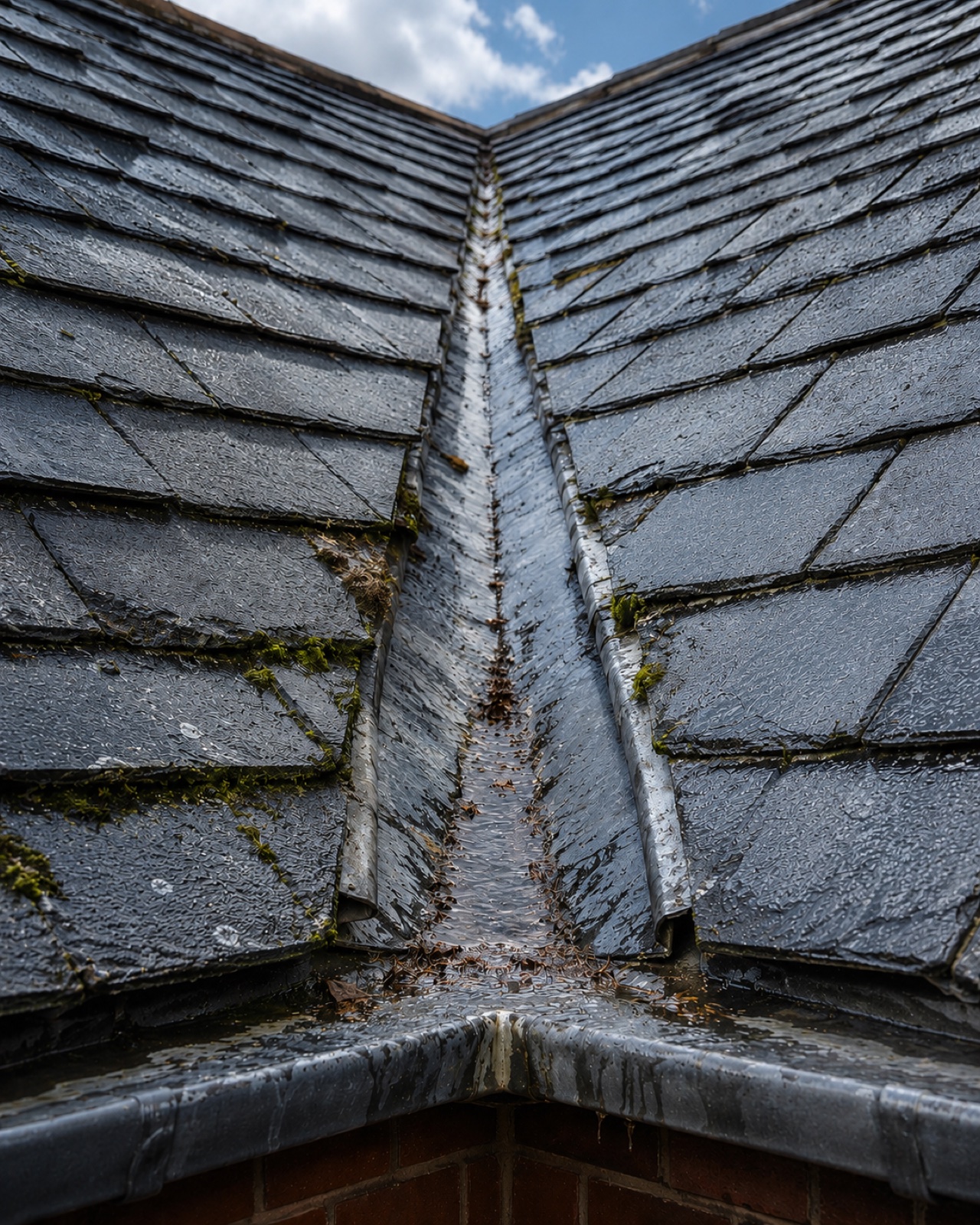
Blocked or damaged valleys
A valley is the channel where two roof slopes meet, and it carries a lot of water. Leaves, moss or a cracked valley tile block or breach it, and water backs up under the surrounding tiles instead of running away.
Cracked ridge or verge mortar
The mortar along the ridge and the gable edges is the most weather-exposed part of the roof. When it cracks and falls away, both the fixing and the seal go with it, and the exposed edge lets water in.
A failed flat roof
Older felt flat roofs split, blister and lose their seams, and pooling water finds every weakness. A flat roof in felt, EPDM or GRP that has reached the end of its life will keep leaking until it is repaired or recovered.
Blocked gutters
Overflowing gutters push water back up under the eaves tiles and down the wall. It is one of the easiest causes to prevent, and one we see constantly after autumn leaf fall. Our autumn roof checklist covers keeping them clear.
Condensation, not a leak at all
A cold, poorly ventilated loft produces condensation that drips and stains the ceiling exactly like a leak. If the damp appears in cold snaps rather than during rain, ventilation is the likely culprit, and the fix is a different one.
How we find and fix the source
We work backwards from the stain. First the loft, with a torch, following the trail of damp along the membrane and timbers up to the highest wet point. Then the roof itself at the likely fault above it: tiles, flashing, valley or verge. Once the real source is found, the repair is usually straightforward, and because we have fixed the cause rather than the symptom, it holds rather than returning with the next downpour.
We make the roof watertight first, then quote for the proper repair.
For a roof letting water in during bad weather, our 24/7 emergency team stabilises it and stops the ingress the same day, then prices the permanent fix once the storm has passed and the roof can be worked on safely.
What a roof leak repair costs
Tracing and fixing a straightforward leak is typically £150 to £500, because the skill is in finding the source rather than in the materials. More involved repairs, renewing the lead around a chimney or sorting a failed flat roof, cost more. Our full roof repair cost guide breaks the common jobs down. The one certainty is that a leak gets more expensive the longer it runs, so catching it early is always the cheaper decision.
When a leak means more than a repair
Most leaks are a simple fix. But repeated leaks in different spots, widespread slipped tiles, a sagging roofline or a covering that is past its lifespan can mean the roof itself is failing, and patching becomes false economy. Our guide to roof repair or replacement helps you tell the difference, and if it does come to a re-roof, what a new roof costs sets out the figures.
A leaking roof in Milton Keynes? We can help
We are a family-run team covering Milton Keynes, Newport Pagnell and the surrounding villages, on local roofs since the 1980s, with 24/7 cover for genuine emergencies. If your roof is leaking, we will find the source, make it watertight, and give you a fixed written price for the repair. You can see the towns and postcodes we cover on our Milton Keynes roofing page.
We will find the source and stop it.
Frequently asked questions
Why is my roof leaking?
Most leaks come from a small number of common faults: slipped, cracked or missing tiles, failed lead flashing around a chimney or wall, a blocked or split valley, cracked ridge or verge mortar, a failed flat roof, or blocked gutters pushing water back under the tiles. Condensation in a poorly ventilated loft can also look exactly like a leak. The water you see inside is often some distance from the actual fault.
Why is my roof leaking when it is not raining?
If damp appears without rain, the usual causes are condensation in a cold, poorly ventilated loft, melting snow or frost working back under the tiles, or water that pooled earlier and is still draining through the structure. A plumbing leak above the ceiling can also be mistaken for a roof leak. A survey tells the difference quickly.
How do you find where a roof is leaking?
Water rarely enters directly above the stain, so we work back from the damp patch to the source: inspecting the loft for the trail along rafters and membrane, then checking the roof at the likely points uphill, the tiles, flashing, valleys and verges. Finding the true source is the skilled part, and it is what stops a leak coming straight back.
What should I do if my roof is leaking right now?
Put a bucket under the drip and move or cover anything valuable. If water is near a light fitting or socket, switch that circuit off at the consumer unit. Take photographs for any insurance claim. Do not climb onto the roof, especially in wet or windy weather. Then call an insured roofer, who will make the roof watertight first and then quote for the permanent repair.
How much does it cost to fix a roof leak?
Tracing and fixing a straightforward leak is typically £150 to £500, because the skill is in finding the source rather than in the materials. More involved repairs cost more. Our roof repair cost guide breaks the common jobs down. A leak left to spread costs far more once it reaches plaster, insulation and timber.
Will home insurance cover a roof leak?
Sudden, accidental damage, such as a storm lifting tiles, is usually covered by standard UK home insurance, though policies vary. A leak caused by gradual wear and tear or lack of maintenance is not. Dated photographs and a written report from an insured roofer make a genuine storm claim far more straightforward, and our guide on roof checks after a storm covers what insurers ask for.