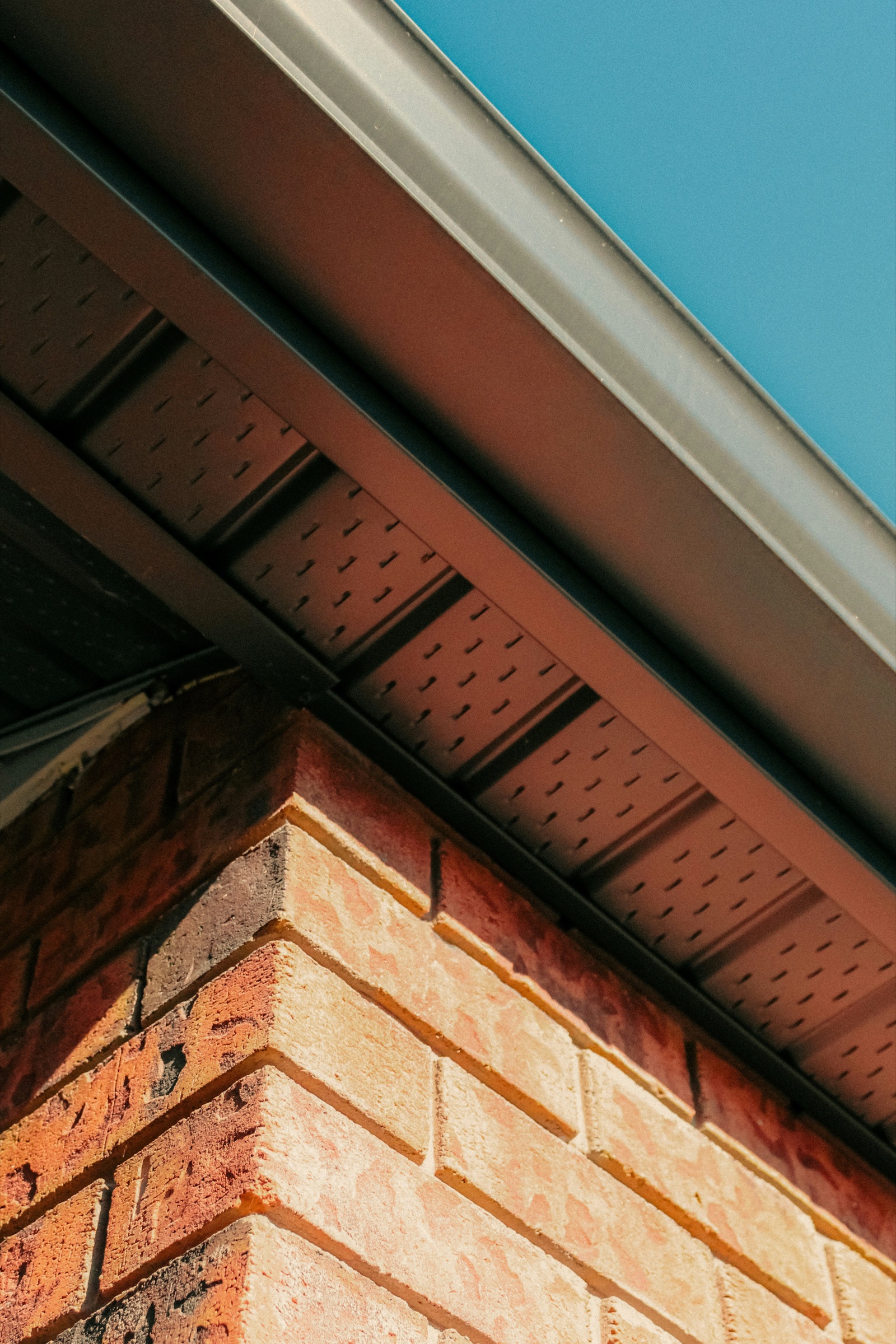
Every winter arrives a little wetter and windier than the last, and the 2026/27 storm season has already been named, with Austen, Boelo and Chloe first on the Met Office's list. The pattern we see across Buckinghamshire every year is the same. A roof that looked perfectly fine in August carries one small, unnoticed fault into winter: a slipped tile, a lifted edge of lead, a gutter half full of leaves. On a dry autumn afternoon none of it matters. Under six weeks of driving rain and a hard frost or two, each one becomes a route for water to get past the roof and into the timbers, plaster and insulation below.
Autumn is the moment to find those faults because you still have time, and dry days, to fix them cheaply. This is the walk-around we recommend to homeowners across Milton Keynes and Newport Pagnell before the clocks change. Almost all of it can be done safely from the ground or from inside the loft.
Start with the gutters and downpipes
If you do only one thing this autumn, clear your gutters. By late October most gutters around Milton Keynes are carrying a full season of leaves, moss and grit. Blocked gutters cannot move water, so it backs up, spills over the edge and runs straight down the fascia board, the brickwork and, eventually, into the wall. In a freeze it is worse still: trapped water expands, splits the joints and pulls brackets away from the fascia.
From an upstairs window or a stable step-ladder you can usually see whether a gutter is running clear. Look for standing water, plant growth along the channel, or a dark stain on the fascia below a joint. When it next rains, watch the downpipes: water should disappear quickly and cleanly at the bottom, not trickle or overflow at the top. While you are looking up, cut back any branches overhanging the roof. They drop the leaves that block the gutters and scrape tiles loose in high wind. A tired or leaking gutter run is worth sorting now as part of your roofline and guttering before winter, rather than in a January downpour.
Check the tiles, ridge and verges
Step back from the property, across the road if you can, and look at the roof as a whole. You are checking the silhouette first, then the surface. The ridge, the top horizontal line of the roof, should look dead straight. Any sag, dip or kink in it is a sign of movement underneath and warrants a call now, not after a storm. Sweep your eye along the eaves at the bottom edge too, then across the tiles themselves.
Tiles should sit in clean horizontal rows. Look for any that are out of position: hanging lower than their neighbours, visibly cracked, or missing altogether. A single slipped tile is a within-the-week job on a dry forecast, but left for winter it lets water onto the underlay every time it rains, and one wet winter is enough to rot a batten. The verges, the diagonal edges at the gable ends, and the ridge tiles along the top are the most exposed parts of any pitched roof, so check the mortar there is intact rather than crumbling.

Look at the flashing, chimney and mortar
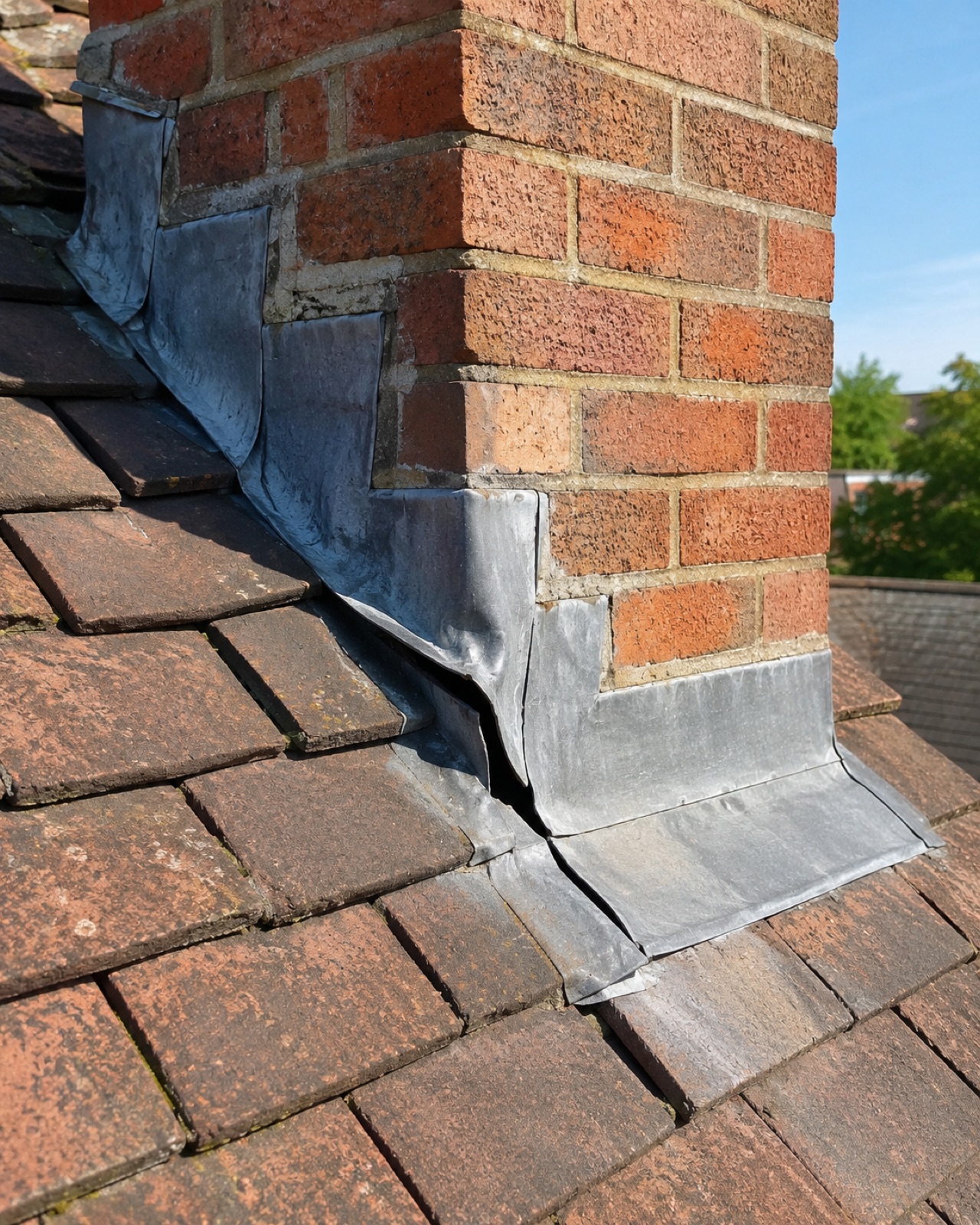
The chimney is the most common place a roof leaks, and winter is when it shows. Lead flashing is the dull-silver strip that seals the joins around chimneys and where a lower roof meets a wall. After a windy summer it can lift or split at the edges, and once it does, wind-driven rain gets straight behind it. Look too at the flaunching, the mortar bed the pots sit in, and the pointing on the stack. Cracked, crumbling or missing mortar lets water into the brickwork, which then freezes, expands and breaks the joints apart over a single cold spell.
If damp has already appeared on a chimney breast indoors, that is almost always flashing or mortar rather than anything dramatic, and we explain exactly how to read those signs in our guide to chimney flashing and damp. Anything involving the stack itself is a job for an insured roofer with the right access, and it is covered under our chimney and leadwork service.
Look inside the loft
Open the loft hatch, take a torch, and spend two or three minutes looking at the underside of the roof. You do not need to walk on anything beyond the standard loft boards. Daylight showing through the roof anywhere is the most urgent warning sign there is, and means a call the same day. Feel a few of the rafters and battens: any that are damp to the touch mean water is getting past the underlay already. Look for stained patches on the membrane and for wet or flattened insulation at the eaves and around the chimney breast.
Autumn is also the time to think about ventilation. A well-ventilated loft carries away the moisture your home produces through winter; a blocked or poorly ventilated one lets it condense on the cold timbers, which over time does the same damage as a leak. If your loft feels damp or smells musty on a cold morning, it is worth mentioning when you book a survey.
Clear the moss, and do not forget flat roofs
A heavy coat of moss holds water against the tiles, and through a freeze-thaw cycle that water expands and works the tiles loose. Clearing it gently in autumn, never with a pressure washer, which drives water under the tiles, keeps the surface draining as it should. If you have a flat roof over an extension, garage or dormer, check it drains cleanly and that the outlets and gullies are clear. Water that pools on a flat roof through autumn is water that freezes and stresses the covering through winter. Our notes on flat roofing cover what a well-laid flat roof should do in the wet.
Never climb onto a roof yourself to check it, however quick it seems.
Wet tiles, slippery moss and autumn wind are a genuine falling hazard. Every check in this guide can be done from the ground or from inside the loft. If something needs a closer look, that is our job, and we are insured and equipped for it.
Book a survey before the queue builds
The honest truth about roofing in winter is that demand spikes the day after the first storm. Once Austen or Boelo has been through, every roofer in the county is booked on emergency call-outs, and a small repair that would have taken an hour in October becomes a fortnight's wait in December, in the rain, at emergency rates. A free autumn survey now is simply the cheaper, calmer way to do it.
We are a family-run team covering Milton Keynes, Newport Pagnell and the surrounding villages, and we have been reading local roofs since the 1980s. If you would rather have someone check it properly, we will inspect the roof, gutters and chimney, tell you honestly what needs doing before winter and what can wait, and put a fixed written price against it. If nothing needs doing, we will tell you that too. You can see the towns and postcodes we cover on our Milton Keynes roofing page.
Get it checked before the first storm.
Frequently asked questions
When should I get my roof ready for winter?
Early autumn, through September and October, is the ideal window. It is before the first named storms arrive and while there are still dry, mild days to make any repairs comfortably and cheaply. Leaving it until the first storm means joining a queue of emergency call-outs in the worst of the weather.
How often should gutters be cleaned?
At least twice a year. The autumn clear, once most of the leaves are down, is the essential one, because blocked gutters through winter are the single most common cause of damp walls and rotten fascias we are called out to.
Can I check my own roof before winter?
Most of the checks worth doing are safe from the ground or from inside the loft with a torch. Never climb onto a roof yourself, particularly in wet or windy weather. Anything that needs close access should be left to an insured roofer.
Does home insurance cover winter storm damage?
Sudden, accidental storm damage is usually covered by standard UK home insurance, though policies vary. Gradual wear and neglect are not. Keeping your roof maintained, and holding dated photographs and written quotes, makes a genuine storm claim far more straightforward. Our guide on roof checks after a storm covers the documentation insurers ask for.
How much does a roof survey cost?
A survey with Clarkson Roofing is free. We inspect the roof, gutters and chimney, explain what we find in plain terms, and give a fixed written quote for anything that needs doing before winter.
What are the signs my roof might not survive winter?
Several slipped or missing tiles, a sagging ridge or eaves line, mortar crumbling from the ridge or chimney, recurring leaks in the same spot, or a roof already past its expected life. If you are weighing up whether to patch or replace, our guide to roof repair or replacement walks through the decision honestly.