If you're reading this, something on your roof has probably caught your attention. Maybe it's a damp patch on a bedroom ceiling. Maybe it's a slipped tile you can see from the pavement. Maybe a recent storm rattled enough to make you nervous. Maybe a national roofing firm has just given you a quote that feels alarmingly high. Whatever it is, the question you're now sitting with is some version of: do I really need a new roof, or can this be repaired?
It's the most expensive question a homeowner can get wrong. A repair on a roof that genuinely needed replacement is money thrown away, the underlying issue persists, the next call-out is a few months away, and you eventually pay for a re-roof anyway. A replacement on a roof that only needed a repair is much, much worse, the difference between £200 and £15,000 is not academic. So getting this right matters.
Here's how we, a family-run roofing firm with forty years on Buckinghamshire and Bedfordshire rooftops, actually think about this decision. No sales pressure, no scaremongering. Just the honest framework.
Why this question matters
The rough cost ranges for context. A small repair re-bedding a slipped ridge tile, replacing a handful of cracked tiles, repointing the mortar around a single chimney, repairing a section of lifted lead flashing, typically falls between £150 and £900 depending on access, scaffold requirements and the materials involved. Some can be done from a ladder on the day; others need a tower.
A larger repair or partial replacement re-roofing one face of a pitched roof, replacing a small flat-roof section, re-leading a complex chimney junction, replacing a stretch of gutter and fascia, generally runs between £1,500 and £6,000.
A full re-roof on a typical UK semi-detached property usually falls between £8,000 and £18,000 including scaffolding, materials, labour and waste removal. Larger detached properties, slate roofs, and complex roofs with valleys, dormers and multiple chimneys run from £18,000 to £30,000+. Heritage slate properties can run higher again.
The point of those numbers isn't to alarm you, it's to make clear how much the decision is worth getting right. The honest answer is almost never the most expensive option a roofer offers you. It's almost never the cheapest, either. It's the option that addresses what the roof actually needs, with materials that match the rest of the structure's expected lifespan.
The signs your roof is asking for attention
Before we get to repair-vs-replacement, here are the warning signs that something needs some kind of attention. If any of these apply to you, a free survey is worth booking, they don't necessarily mean a replacement, but they're all worth a proper look.
Visible from outside
- Slipped, cracked, missing or visibly broken tiles or slates
- A sagging line along the ridge, the roof should look straight from the street
- Damaged or lifted lead flashing around chimneys, parapets and roof junctions
- Blocked or overflowing gutters causing water to run down the wall
- Moss build-up that looks more substantial than seasonal, particularly on north-facing pitches
- A chimney leaning or with visible mortar gaps between the bricks
- Tile granules in the gutter, a sign that concrete tiles are reaching end-of-life
Visible from inside
- Damp patches, water staining or yellowing on bedroom or top-floor ceilings
- Daylight visible in the loft (not vent-related)
- Peeling wallpaper or paint near the ceiling-to-wall junction on upper floors
- A musty smell in the loft, particularly after rain
- Higher than expected heating bills, failing underlayer or insulation
- Wet timber or visibly damp insulation in the loft
A roof in distress rarely waits to be fixed politely. Small problems compound, a slipped tile lets water onto the underlay, the underlay fails, water gets to the timbers, the timbers rot, the structural cost suddenly multiplies. Catching things early is the single biggest saving available to a homeowner.
When a targeted repair is the right call
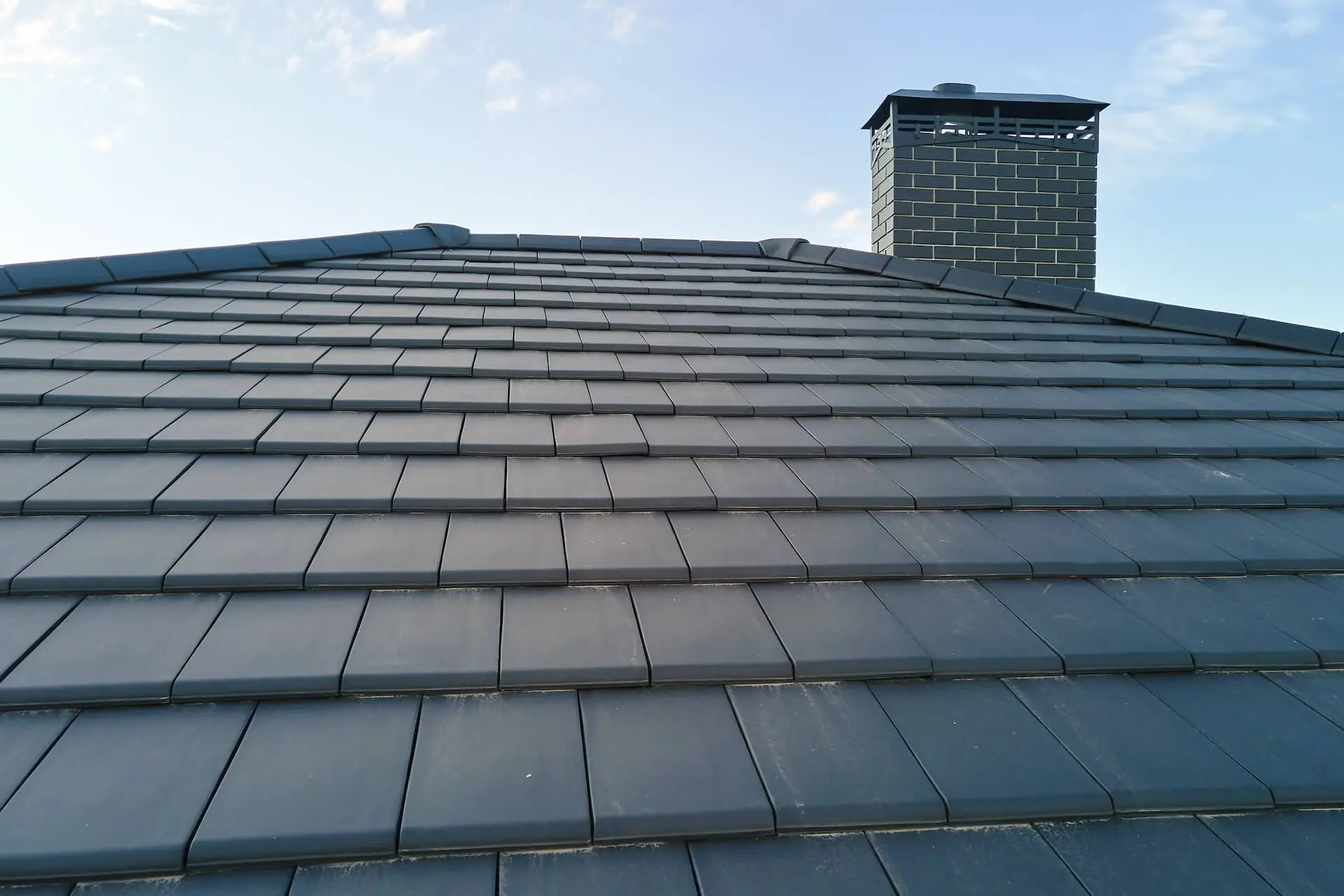
A repair is the right answer when the damage is genuinely localised and the rest of the roof is in good condition. The honest test we use is: if we fix this issue, will the roof realistically last another 10–20 years without further significant intervention? If yes, it's a repair.
Common repair scenarios where we recommend exactly that:
- Storm damage to a handful of tiles. A high-wind event lifts or cracks specific tiles. The underlay underneath is sound. Replacement tiles are sourced and laid. Cost: low hundreds.
- A single slipped ridge tile. Mortar bedding has failed at one point along the apex. Tile re-bedded, others checked, ridge inspected. Cost: low hundreds.
- Lifted lead flashing around a chimney. The flashing has pulled away from the masonry but the lead itself is sound. Re-dressed, re-fixed, mortar joint pointed. Cost: a few hundred to low thousand depending on chimney complexity and scaffold needs.
- A localised flat-roof leak. Specific failure point in the membrane (often a join or a flashing detail). Patch repair where the rest of the surface is sound. Cost: a few hundred.
- Blocked or sagging gutters causing localised damp. Often the actual problem behind a "leak" water overflowing the gutter line and running behind the fascia. Cleared, re-secured, sometimes a small section replaced. Cost: low hundreds.
For roofs under 15 years old, repairs are almost always the correct answer when problems appear. Modern roofing materials are durable, the underlay is usually still well within its lifespan, and a young roof generally hasn't accumulated the multiple failure points that justify replacement.
When replacement makes more financial sense
Replacement becomes the right answer when one or more of these conditions are true:
1. The roof is at or past its expected lifespan
Material lifespans are real. A concrete tile roof installed in the mid-1970s has done its job, the tiles themselves may even look fine, but the underlayer (the felt or membrane beneath them) is at the end of its life, and that's the layer that actually keeps the property dry. Continuing to repair such a roof is repairing the wrong thing.
2. You've had multiple repairs in the last 2–3 years
If you've called a roofer two or three times in recent memory for separate issues, the roof is telling you it's in systemic decline rather than experiencing isolated failures. Cumulatively, you may already have spent close to the cost of a planned re-roof, but without the warranty or the next 30 years of certainty.
3. The underlayer (felt) has failed
This is the most decisive single factor and the most often missed. Even if the visible tiles look fine, when the underlayer fails, the roof loses its waterproofing redundancy. From the loft, you'll see daylight, sagging felt, or felt that crumbles when touched. Re-felting requires lifting every tile, which is essentially a re-roof.
4. Structural movement
A visibly sagging roofline, ridge line or eave indicates timber failure underneath, rotten rafters, failed battens, structural movement. This isn't a tile problem; it's a structural problem requiring strip-and-rebuild.
5. Substantial moss penetration
Surface moss is cosmetic. Moss with substantial root penetration into the tile body (visible from the underside in the loft, or as crumbling tiles) is a sign that the tile material is at end-of-life, particularly with older concrete tiles.
If you'd spend more than 30–40% of a re-roof cost on cumulative repairs over five years, you're better off planning the re-roof.
The exception is for properties you're certainly leaving within 18–24 months. Then a repair-led approach can make sense, as long as the property remains insurable and the survey reports honestly to a buyer.
The grey area: partial replacement
There's a middle ground that's often the right answer and that few homeowners realise exists.
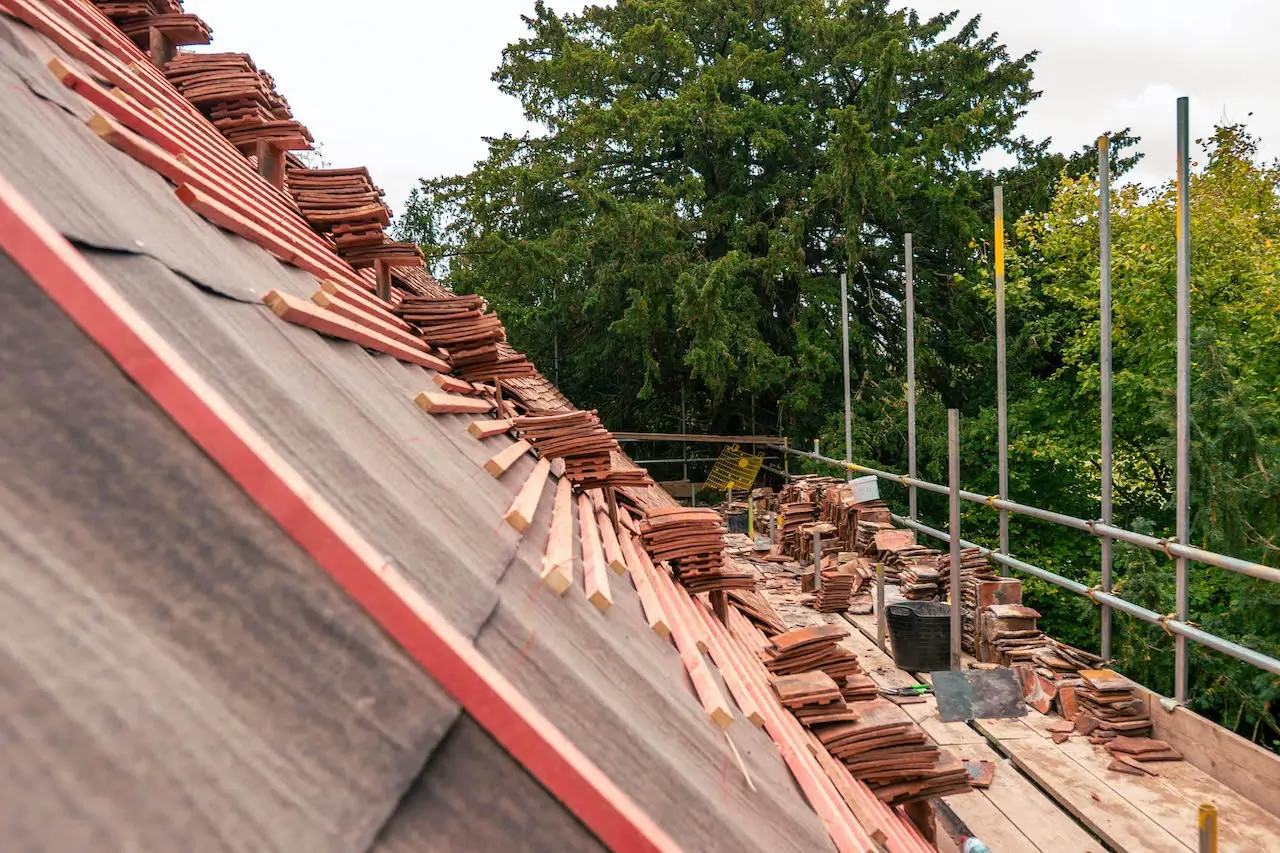
Replacing one pitch of a pitched roof. If your roof's two pitches have aged differently (often because one faces south and weathers harder), it's perfectly legitimate to re-roof one pitch while leaving the other for another decade. We do this regularly. Same with replacing only a complex valley or only a single dormer section.
Replacing just the flat-roof section on a property where the main pitched roof is in good condition. Flat roofs typically have shorter lifespans than pitched roofs, it's normal for a flat roof to need replacement long before the rest of the property's roof does.
Re-roofing in the same material but retaining the structure. Stripping slate, replacing the underlay and battens, and re-laying the same slate (plus topping up with reclaimed slate where damaged). This is the right answer on heritage properties with high-value original materials worth preserving.
The honest test for partial replacement is whether the boundary between old and new will weather convincingly, both visually and functionally, over the next decade or two. If yes, partial replacement saves substantial money. If no, you're often better off committing to the full re-roof and not having a visible patch line.
What an honest survey actually looks like
The single best thing you can do is get a proper survey from a roofer with no incentive to upsell you. A free survey from us takes about an hour and includes:
- A walk around the property. Looking at the elevations, checking the line of the ridge, scanning for slipped or damaged tiles, photographing anything notable. Ideally on a clear day after recent rain so wet patches are visible.
- An internal inspection of the loft. Often the most diagnostic part. Underlay condition, daylight, damp timbers, insulation state, signs of historical leaks.
- A close look at the key joints. Chimney flashing, valleys, abutments where the roof meets a wall, dormer junctions. These are where most failures actually originate.
- A plain-English conversation about findings. No jargon, no sales pressure. What we found, what we'd recommend, what could wait, what couldn't.
- A fixed-price, itemised written quote. Materials, labour, scaffold, waste removal, warranty. Everything in writing.
If a roofer tells you you need a full re-roof without doing all five steps above, get a second opinion. The most expensive option in roofing is the one chosen without proper diagnosis.
Material lifespans at a glance
Use these as an anchor when thinking about your own roof:
- Natural slate: 80–100+ years
- Clay tile: 60–80 years
- Concrete tile: 30–50 years
- Felt flat roof: 10–15 years
- EPDM rubber: 30–50 years
- GRP fibreglass: 20–30 years
- Lead flashing: 100+ years
- Mortar / pointing: 20–40 years before repointing
- Underlay (modern breathable): 40–60 years
- Underlay (traditional felt): 20–30 years
These are realistic UK lifespans, not optimistic manufacturer claims, but what we actually see across the homes we work on. If your roof is approaching or past one of these markers and is showing problems, replacement is increasingly likely to be the right answer. If it's well within these ranges and the problem is localised, repair almost always wins.
How to choose a roofer you can trust
A few things to look for, in no particular order. The roofer should be local (within an hour's drive of you), should be insured (ask for the certificate), should be willing to give a fixed-price written quote rather than a vague verbal estimate, and should be happy to be a second opinion on another firm's quote without pressure.
Watch out for: door-to-door cold-calling roofers (almost never the right firm), aggressive same-day pressure to sign, refusal to provide a written quote, quotes that are dramatically lower than three or four others (corners will be cut), or quotes without scaffold included (often a sign of cash-in-hand work without proper safety).
If you want to read more about how we think about this trade, our introduction to Clarkson Roofing covers the family's forty years on local rooftops and what to expect when you give us a call.
The shortest possible summary
Localised damage on a young or mid-life roof: repair. Multiple repair calls over 2–3 years, end-of-life underlay, or material at the end of its lifespan: replacement. One side of the roof failing while the other is sound, or a flat-roof section on an otherwise good pitched roof: partial replacement.
And in every case, the right next step is the same: a proper free survey from a roofer with no incentive to upsell you. Book one with us, or call 07497 711223 directly.
Honest assessment. Fixed-price quote. No sales pressure.
Common questions.
The questions homeowners ask us most often about repair, replacement and roof condition.