Ask three roofers what a repair costs and you can get three very different answers, and none of them is necessarily wrong. The figure depends far more on how the roof is reached, and on how long the fault has been left, than on the broken tile itself. This guide gives honest 2026 ranges for the repairs we are called out to most across Milton Keynes and Newport Pagnell, so you can read a quote knowing roughly what is fair.
These are typical figures for the work itself. A real quote always depends on your specific roof, which is why ours follow a free survey rather than a guess down the phone. Treat the numbers below as a sense of scale, not a fixed price list.
What drives the cost of a roof repair
Four things move a repair price far more than the material ever does.
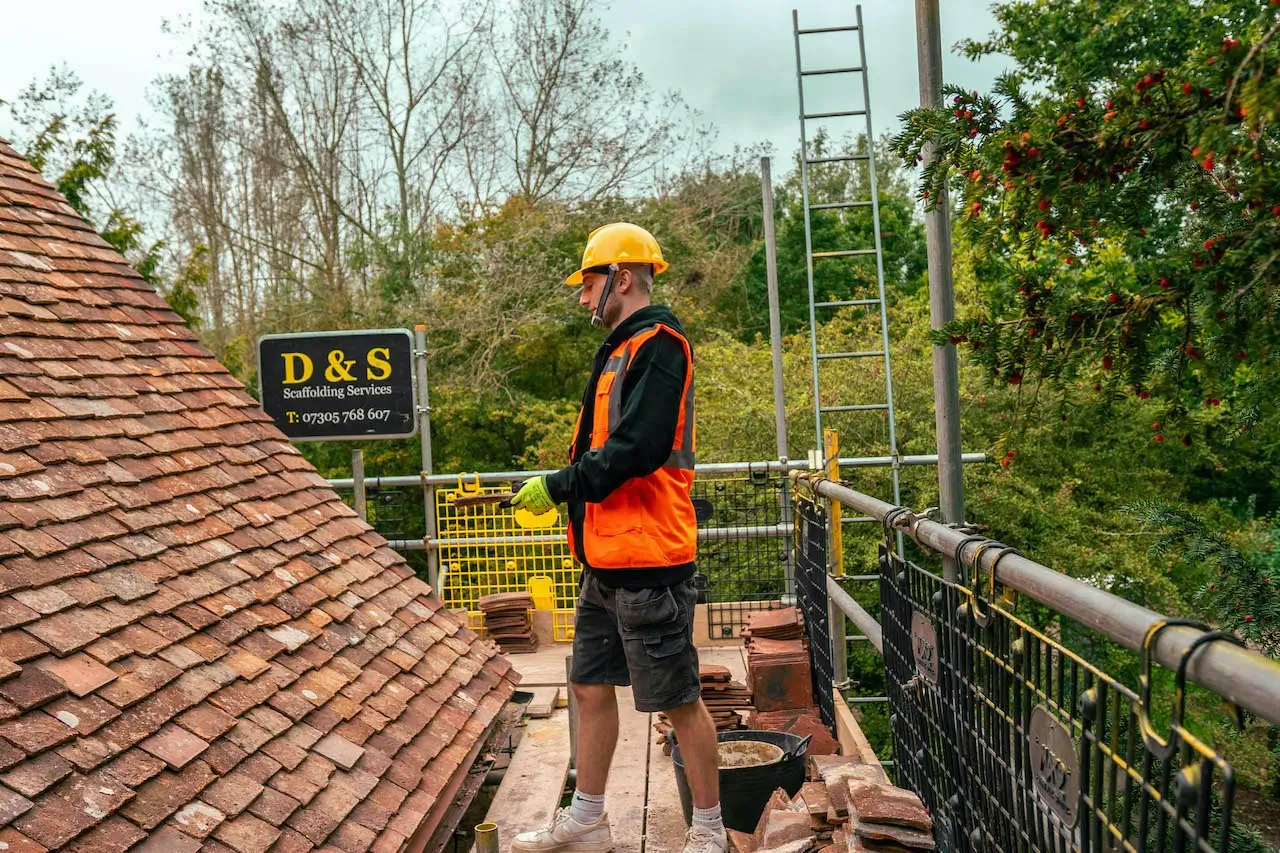
Access. This is the big one. A fault you can reach from a ladder at the eaves is a different job from the same fault high on a three-storey gable. Once a repair needs scaffolding or an access tower to be done safely, the access alone can cost more than the repair. It is also the most common reason two quotes for the same job come back hundreds of pounds apart.
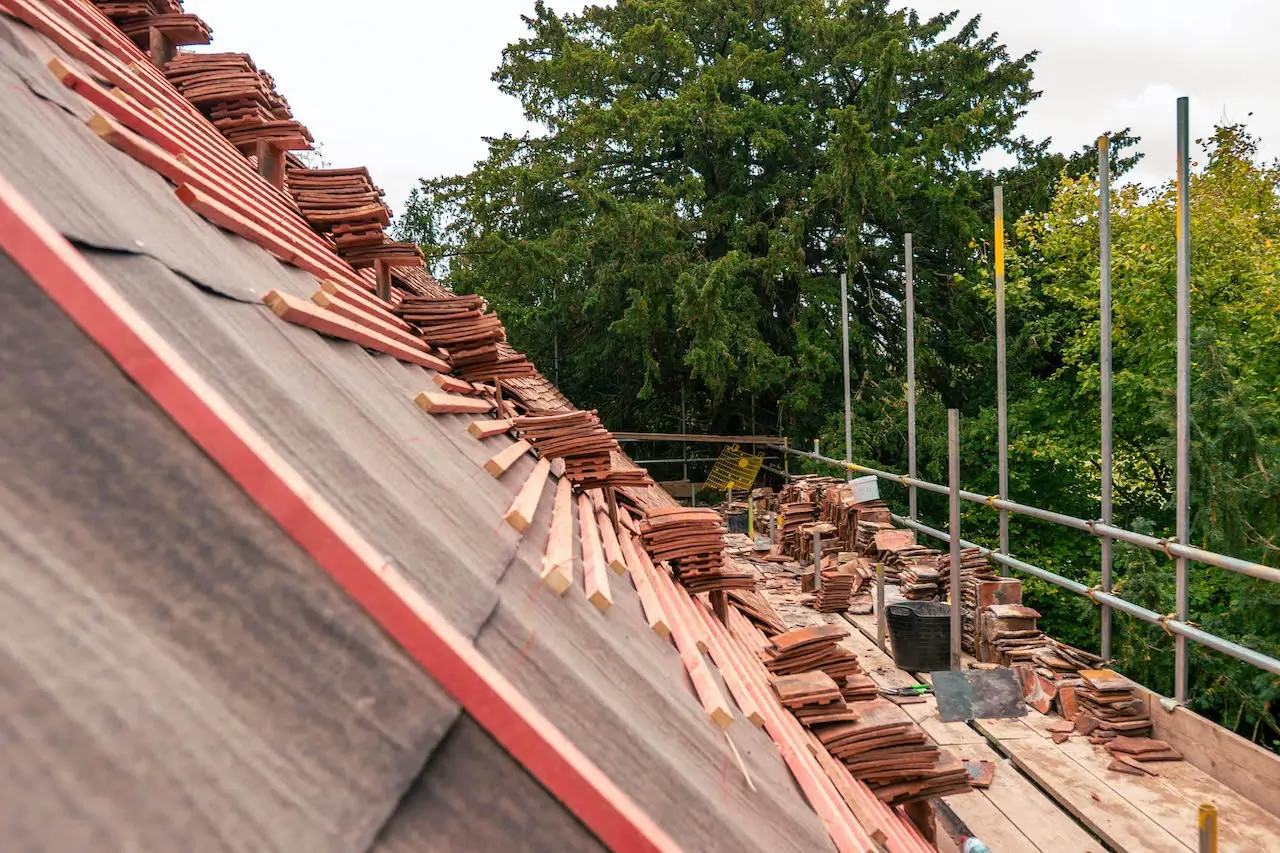
How far it has spread. A slipped tile caught in October is a quick fix. The same tile left all winter lets water onto the underlay and battens, and now the repair includes timber. Catching a fault early is the cheapest decision you will make about your roof.
Materials and matching. Standard concrete tiles are inexpensive and easy to source. Hand-made clay, natural slate, or anything on a period or conservation property, costs more and takes longer to match, and the price reflects it.
Urgency. A planned repair in settled weather is cheaper than a late-night emergency call-out to make a roof watertight in a storm. Catching problems early keeps you firmly in the first category.
Typical roof repair costs in 2026
Here is what the common jobs tend to cost for the work itself, before access is added. Every roof is different, so read these as a guide rather than a quote.
Slipped or cracked tiles: £150 to £400
Resecuring or replacing a handful of tiles is one of the most common repairs we do. The cost is mostly labour and safe access rather than the tiles themselves. Left unfixed, a single slipped tile is behind most of the mystery leaks we get called to.
Roof leak, traced and fixed: £150 to £500
A leak rarely appears directly below where the water gets in, so you are paying for the diagnosis as much as the fix. We trace it back to the source, a slipped tile, failed flashing or a blocked valley, and repair the cause rather than the damp patch.
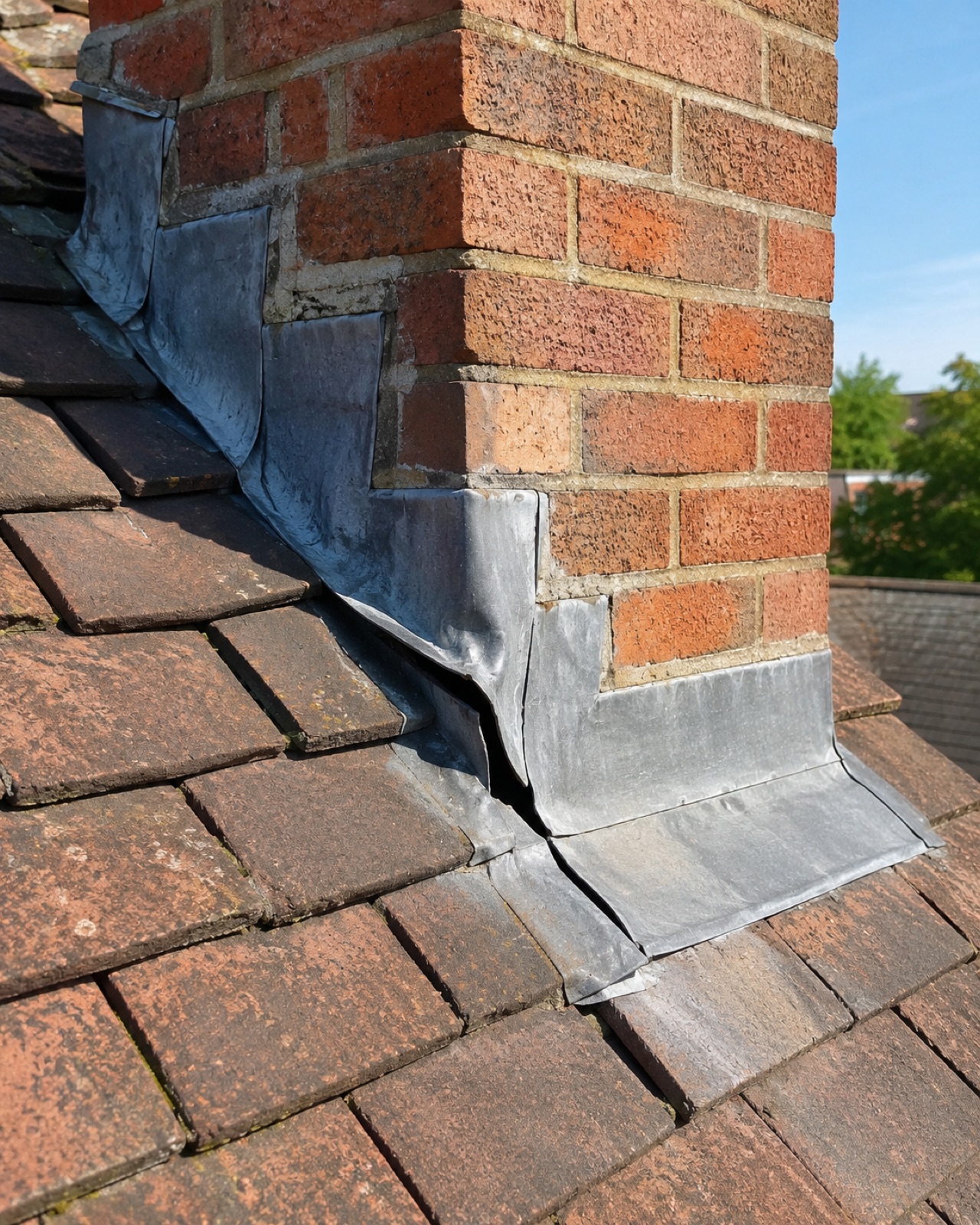
Lead flashing repair or renewal: £200 to £700
The lead around chimneys, valleys and where a roof meets a wall is a frequent leak point once it lifts or splits. A single section sits at the lower end, while renewing the lead around a full chimney in new code 4 to 6 lead costs more.
Ridge or verge re-bedding: £500 to £1,200
Loose or fallen ridge tiles and crumbling verge mortar are classic exposed-edge failures. Re-bedding and re-pointing a full ridge, or converting to a dry-fix system, falls in this range depending on length and access.
Flat roof repair: £150 to £1,500
A small patch to a felt, EPDM or GRP flat roof can be a couple of hundred pounds. Re-sealing failed seams or correcting pooling water over a larger area runs higher. Where the covering has failed throughout, a flat roof recover is usually better value than repeated patching.
Chimney repointing and flaunching: £300 to £800
Repointing the stack and renewing the mortar bed the pots sit in keeps water out of the brickwork, where it would otherwise freeze and split the joints. A leaning or badly spalled stack that needs rebuilding is a larger job we would price after a survey.
Why the same repair can be quoted very differently
If two prices for the same repair come back hundreds of pounds apart, access and scope almost always explain it. One roofer may have priced for scaffolding and a proper make-safe, while the other quoted a quick ladder job that is neither safe nor lasting. Cheaper is not always better value: a repair done without the right access, or one that treats the damp patch instead of the cause, is the repair you end up paying for twice. Always ask exactly what a price includes before you set it against another quote.
What a fair repair quote should include
A clear roof repair quote spells out the access method, whether ladder, tower or scaffold, exactly what will be repaired, whether VAT is included, and what guarantee covers the work. Be wary of a cash-only price from someone who knocked on the door, and of anyone unwilling to put a quote in writing. A reputable roofer is insured, explains the fault in plain terms, and is happy to stand behind a written figure. The roofing trade body, the NFRC, is a useful place to check a contractor.
Catch it early and the number stays small
Almost every expensive roof repair started as a cheap one that was left. A slipped tile is a short visit; the same tile ignored through a wet winter rots the batten, soaks the insulation and stains the ceiling, and now you are paying for timber, a plasterer and a decorator as well. The single biggest influence on what a repair costs is how quickly it is dealt with.
Never climb onto a roof yourself to save on a repair.
Wet tiles, moss and wind make a roof a genuine falling hazard, and a fall costs far more than any repair. Safe access is part of the price for a reason. Checks from the ground or the loft are fine; anything on the roof is a job for an insured roofer.
Roof repairs in Milton Keynes and Newport Pagnell
We are a family-run team covering Milton Keynes, Newport Pagnell and the surrounding villages, and we have been repairing local roofs since the 1980s. Our roof repairs in Milton Keynes cover slipped tiles, leaks, flashing, ridge, valleys and flat roofs, and every quote follows a free survey with a fixed written price. If you are weighing a repair against a full re-roof, our guides to roof repair or replacement and what a new roof costs set out the wider numbers. You can see the towns and postcodes we cover on our Milton Keynes roofing page.
Get a fixed written price for the repair.
Frequently asked questions
How much does it cost to repair a roof in the UK?
Most everyday roof repairs in 2026 fall between about £150 and £1,200, depending on the fault and how it is reached. Replacing a few slipped tiles can be £150 to £400, while re-bedding a full ridge or renewing lead flashing runs higher. The biggest single factor is access: a repair reachable from a ladder costs far less than one that needs scaffolding. A free survey gives you a fixed written figure.
How much does it cost to fix a roof leak?
Tracing and fixing a straightforward leak is typically £150 to £500, because the skill is in finding the source rather than in the materials. A leak rarely shows directly below where the water gets in, so the cost reflects the diagnosis as much as the repair. A leak left to spread costs far more once it reaches plaster, insulation and timber.
How much does flat roof repair cost?
A small patch to a felt, EPDM or GRP flat roof is often £150 to £500. A larger repair, re-sealing seams or correcting poor falls and pooling water, runs £400 to £1,500. If the covering has failed across the whole roof, a flat roof recover is usually better value than repeated patching.
Is it cheaper to repair or replace a roof?
A repair is almost always cheaper in the short term, and when the damage is localised it is the right and honest answer. A replacement only makes sense once the covering, underlay or structure has reached the end of its life, at which point repeated repairs become false economy. Our guide to roof repair or replacement walks through the decision honestly.
Do roof repairs need scaffolding?
Not always. Minor work at the eaves or on a single-storey roof can sometimes be done safely from a ladder or access tower. Anything higher, steeper or over a longer stretch needs scaffolding, which is the main reason two similar-sounding repairs can be priced very differently. Safe access is never the place to cut corners.
Will home insurance pay for roof repairs?
Sudden, accidental damage, such as a storm lifting tiles, is usually covered by standard UK home insurance, though policies vary. Gradual wear and tear and lack of maintenance are not. Dated photographs and a written report from an insured roofer make a genuine claim far more straightforward, and our guide on roof checks after a storm covers what insurers ask for.