Almost every homeowner who calls us about a re-roof opens with the same sentence. "I just want to know roughly what this is going to cost." Fair enough. The honest answer starts with "it depends", and by the time we have listed all the variables (pitch, materials, access, chimneys, insulation, listed status, VAT) people reasonably switch off. So here is the guide we wish existed. Real 2026 UK ranges, real reasons the numbers move, no vagueness.
A full pitched re-roof on a UK three bed semi in 2026 sits between £7,500 and £16,000, all in. A flat roof replacement on a rear addition is typically £1,800 to £6,500. Both go higher on natural slate, listed properties, or awkward access. The rest of this guide unpacks why.
What actually drives the cost of a new roof
Roofers price against six or seven consistent variables. Understand these and every quote you receive will make far more sense.
Roof area (m²). Everything keys off the roof's surface area, which is bigger than your floorplan because of the pitch. A 60m² footprint at 35 degrees is closer to 74m² of actual roof.
Material. The biggest lever. Interlocking concrete tiles are the value option, natural slate the premium, plain clay tiles sit between. Flat roof systems tier from budget felt through GRP fibreglass to EPDM rubber and cold-apply liquid.
Complexity. Valleys, hips, chimneys, dormers, Velux windows and abutments all need flashing, lead work and slower hand cutting. A simple gable-to-gable roof is dramatically cheaper per m² than a hipped roof with two chimneys.
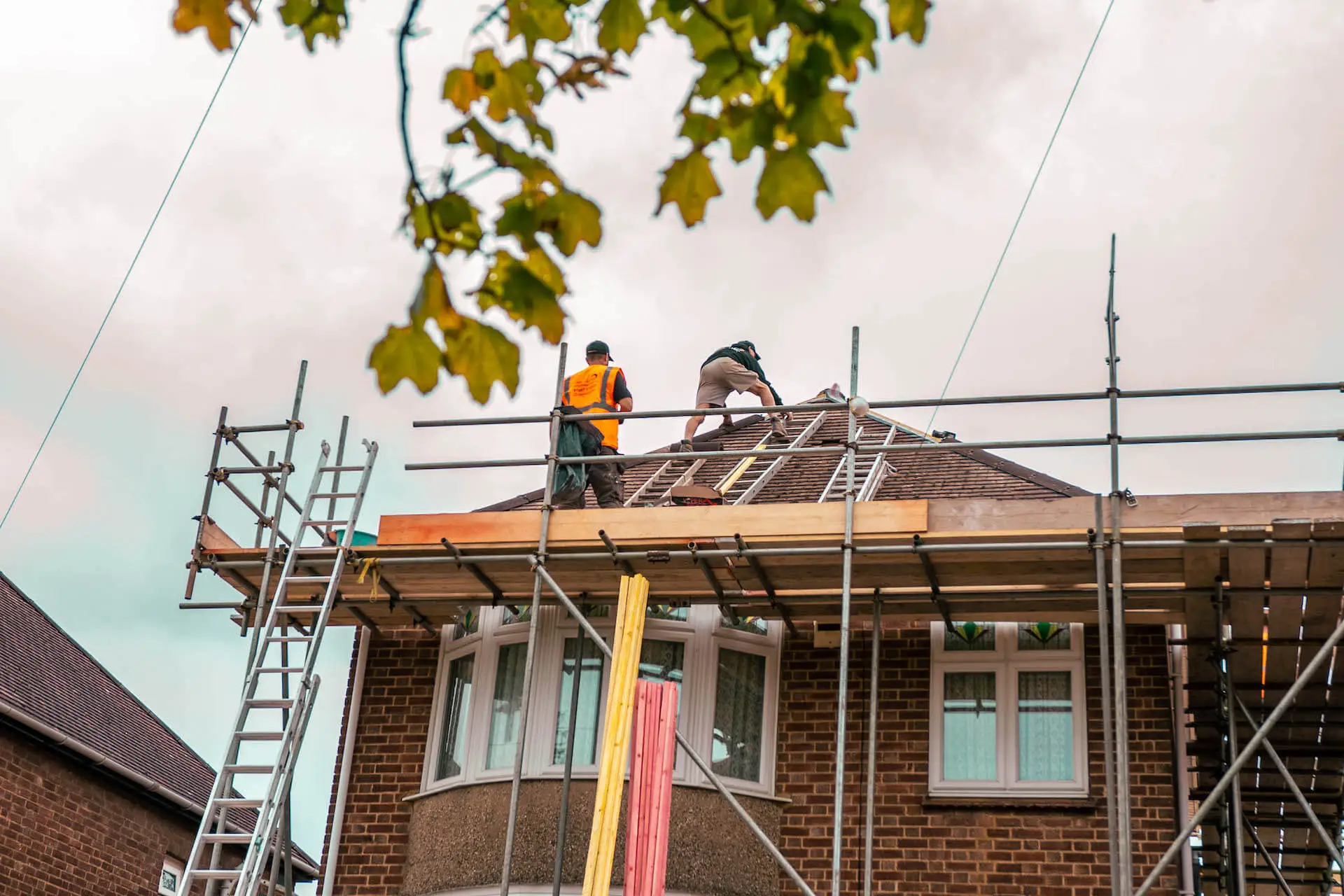
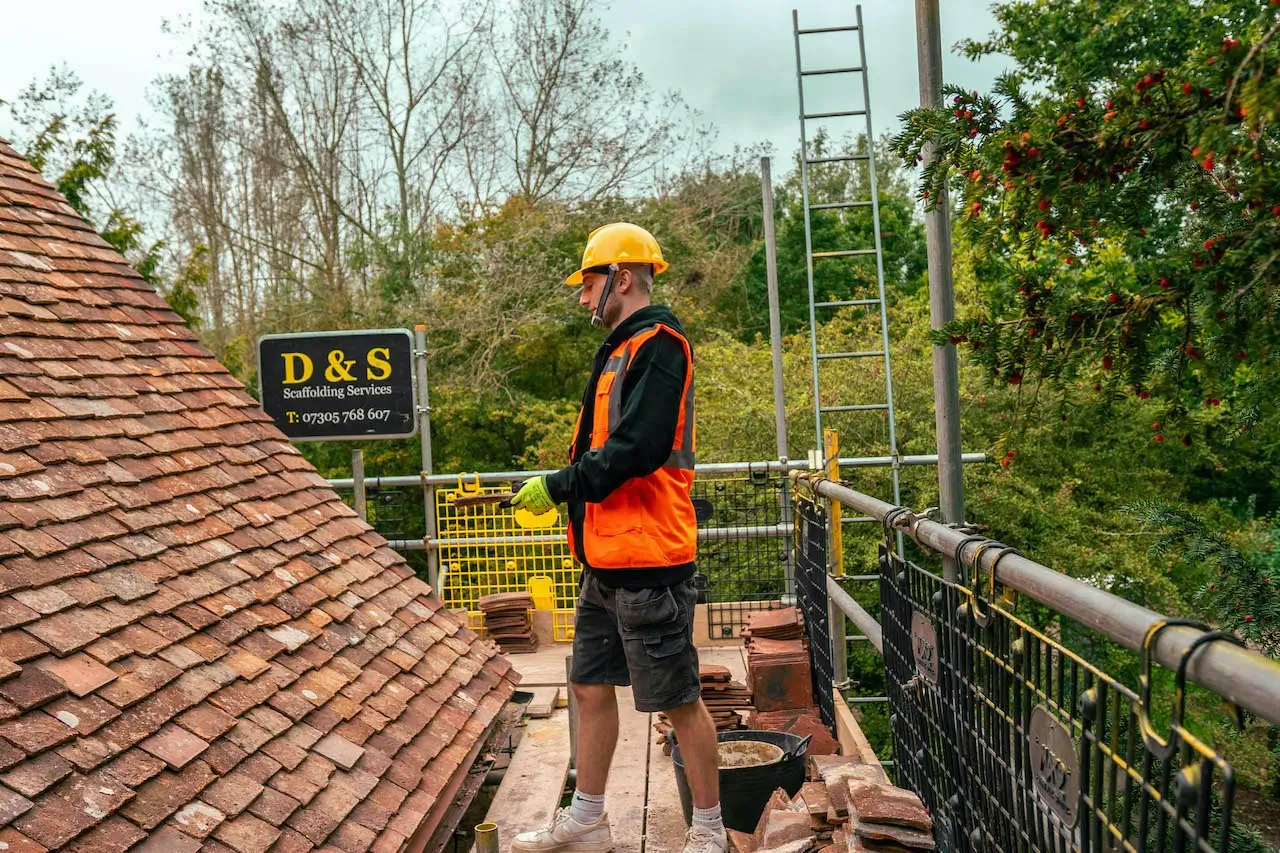
Access and scaffolding. Scaffolding on a three bed semi is usually £1,200 to £2,400 for the duration. A terraced street with a road licence adds meaningfully more.
What comes off, what stays. A full strip back to rafters, replacing battens and underlay, always costs more than a strip and re-cover. On roofs older than 30 years we almost always recommend the former.
Location and VAT. London and the South East run 15 to 25 per cent above the national average. Milton Keynes and Buckinghamshire sit close to the national average. VAT-registered contractors include 20 per cent VAT; a non-VAT sole trader may look cheaper but often struggles on warranty and Building Regs sign-off.
Average new roof cost UK 2026, by house size
These are full re-roof ranges. Strip to rafters, new breathable underlay, new treated battens, new tiles or slate, dry-fix ridge and verge, new lead flashings, scaffolding and VAT included. They assume a standard pitched roof with two chimneys or fewer and no listed building constraints.
- Small mid-terrace (60 to 80m² roof area): £5,500 to £9,500 concrete tile. £7,500 to £13,000 natural slate.
- Three bed semi (80 to 110m²): £7,500 to £13,500 concrete tile. £10,000 to £16,000 plain clay. £14,000 to £22,000 natural slate.
- Four bed detached (110 to 160m²): £11,000 to £18,500 concrete tile. £14,000 to £22,000 plain clay. £20,000 to £34,000 natural slate.
- Bungalow (100 to 140m², larger footprint): £9,500 to £16,500 concrete tile. Bungalow scaffolding is usually cheaper, but the area is wider than you might expect.
- Listed or conservation area (any size): Typically 30 to 60 per cent above the market rate for the equivalent house. Reclaimed slate, hand-made clay, planning conditions and specialist labour all add.
If you want a genuine written quote against your own property, our free roof survey takes about forty minutes on site and returns a fixed price, itemised, within a few working days.
Pitched roof cost per m² by material
The pitched roof cost per m² varies hugely by material, and the material choice usually accounts for 40 to 55 per cent of the total quote. Here are the 2026 supply and fit ranges you should expect, before scaffolding, chimney work and VAT are added.
Interlocking concrete tile: £80 to £120 per m²
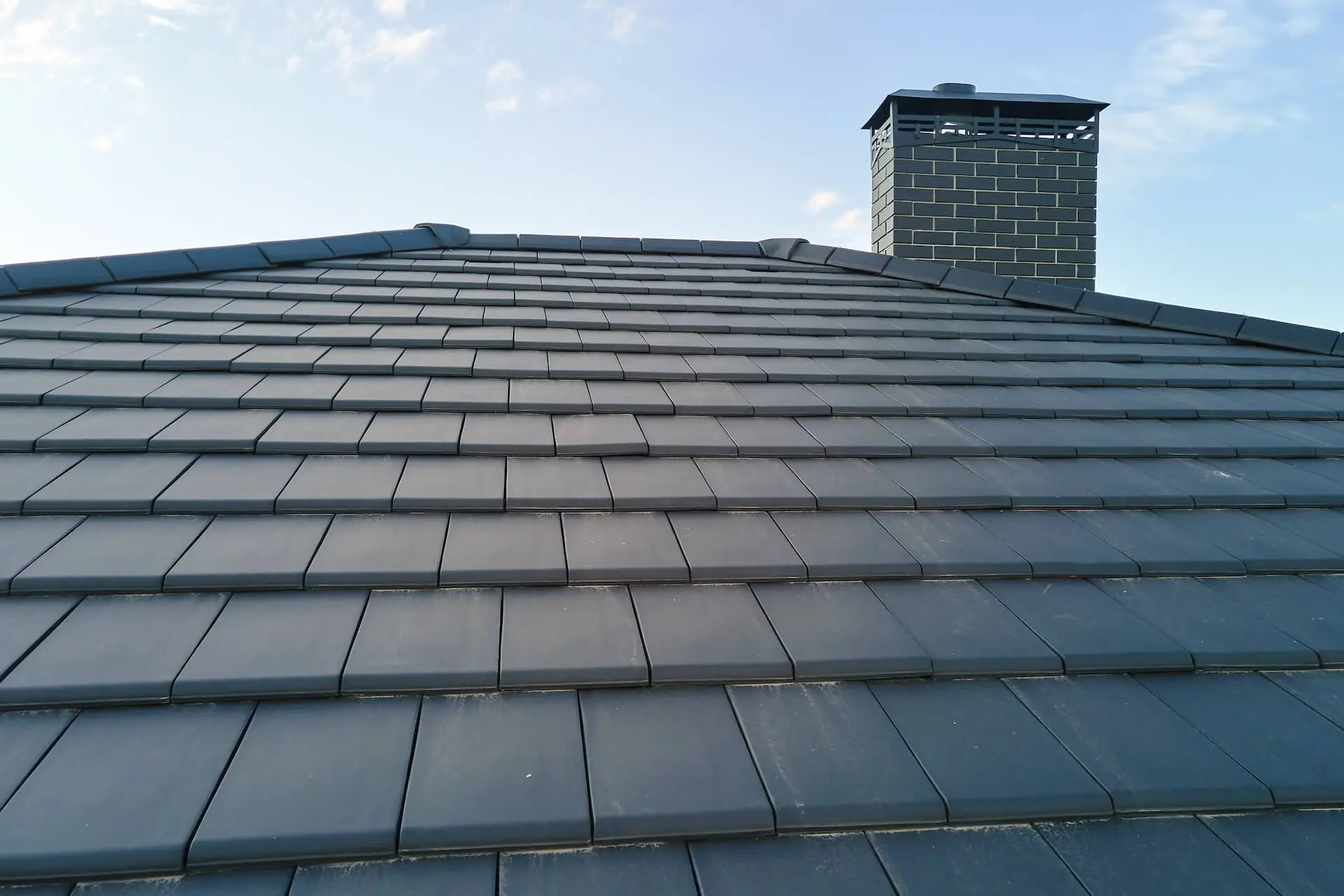
The workhorse of UK re-roofs and the material most 1960s onward homes are already wearing. Marley Modern, Redland Regent, Sandtoft Standard. Widely available, quick to lay because tiles interlock, lifespan of 40 to 60 years with proper underlay and ventilation. Best value per m². Where 80 per cent of our residential re-roofs land.
Plain clay tile: £120 to £180 per m²
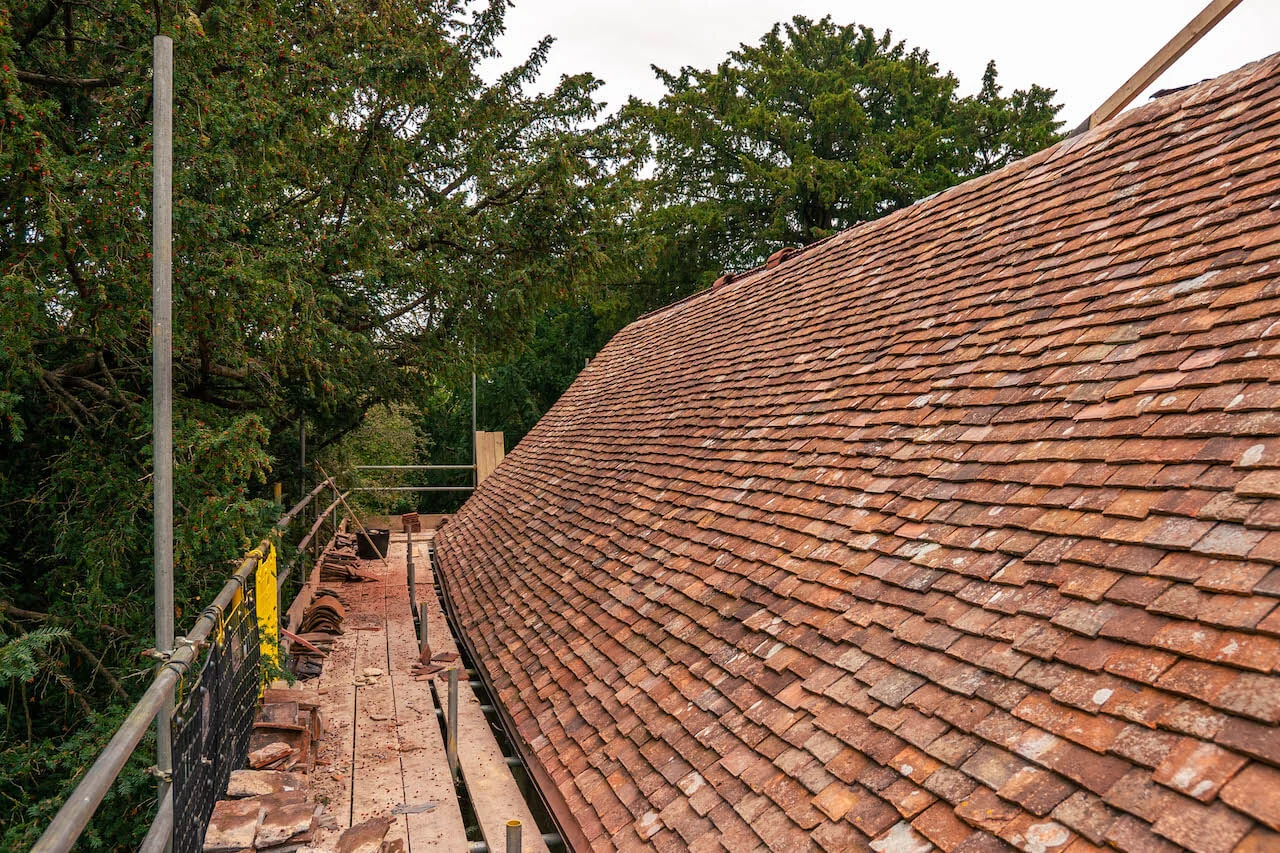
The traditional English tile. Smaller, hand-laid, double lap. Slower to fit (roughly twice the labour of interlocking concrete) but far more attractive on period homes and lasts twice as long. Rosemary, Keymer, Marley Acme. Common in conservation areas across South Northants and North Bucks.
Natural slate: £150 to £250 per m²
Spanish, Welsh or Brazilian. Welsh is the premium option and priced accordingly. Slate is heavier, slower to fit, and demands proper fixings (usually copper nails or hooks), but the finish is unmatched and lifespan runs to 100 years plus. For a detailed material comparison see our slate vs clay vs concrete tile guide.
Reclaimed slate: £200 to £350 per m²
Required on most listed and many conservation properties for a proper match. Sourcing is the issue, not laying. On a good day we can source in a fortnight; on a bad one it takes months. Budget accordingly.
Flat roof replacement cost by system
Flat roofs cover rear additions, dormers, garages, porches and (in modern builds) whole houses. The re-roofing cost per m² is generally lower than pitched, but material choice matters even more because flat roof lifespans vary from 15 to 50 years depending on system. Ranges below are for a typical 20 to 30m² rear addition, supply and fit, including insulation and edge detail.
Torch-on felt: £70 to £110 per m²
The classic three-layer built-up bitumen system. Cheap, long-established, still fine for garages and outbuildings. Lifespan 15 to 25 years, less if it sits under overhanging trees. Not our first recommendation for a habitable extension in 2026.
GRP fibreglass: £90 to £140 per m²
Cold-applied, laid wet, cures to a seamless hard surface. Popular for smaller extensions, dormers and porches. Lifespan 25 to 30 years. Vulnerable to hairline cracks around edges over time. Read our full EPDM vs GRP vs felt comparison before deciding.
EPDM rubber: £100 to £160 per m²
Single-ply synthetic rubber, largely laid in one continuous sheet, with no naked flame required on site. Our default recommendation for domestic flat roofs in 2026. Lifespan 25 to 50 years, factory guarantees to 20. Excellent on complex shapes.
Cold-apply liquid waterproofing: £110 to £180 per m²
Fully bonded liquid system that flashes any detail without seams. Ideal on roofs with lots of pipes, upstands and complex intersections. Higher labour cost, higher lifespan (25 to 40 years with the right primer and reinforcement layer). See our flat roofing services for spec detail.
The hidden extras most quotes miss
The biggest reason two quotes for the same job can look £4,000 apart is what they include and, more importantly, exclude. Each of the following should be itemised on your written quote.
Scaffolding. Typically £1,200 to £2,400 for a three bed semi. Road licences or bay suspensions add £300 to £900. Confirm the scaffold provider is registered and insured.
Skip hire and waste removal. Budget £250 to £600 for skips, more for grab lorries on larger jobs. Fly-tipping liability falls on the homeowner if the contractor does not provide waste transfer notes.
Chimney work. Most old chimneys need something. Budget £600 to £1,500 for a single repoint and reflash, £1,800 to £3,500 for a top rebuild, £2,500 to £5,000 to remove and cap. Our chimney and lead work service details the options.
New breathable underlay and battens. On any re-roof older than 25 years this should not be optional. Typically £8 to £14 per m² on top of the tile cost.
Insulation. Building Regs Part L kicks in whenever more than 50 per cent of the covering is replaced. Loft upgrade to current standards is £400 to £1,200. A Competent Roofer scheme member notifies directly.
Dry-fix ridge, hip and verge. Mortar-bedded ridges fail within 15 years. Dry-fix uses mechanical clips and gaskets, guaranteed 15 years, and adds £600 to £1,200 to the job. Any 2026 re-roof should be dry-fix.
Guttering and roofline. If your fascias, soffits or gutters are near end of life, scaffolding is already up, so replacement labour is a fraction of doing it standalone. See roofline and guttering. Budget £900 to £2,400.
VAT and listed consent. Twenty per cent VAT on labour and materials for VAT-registered firms. Listed building or conservation consent, where required, adds £250 to £600 in fees and 4 to 12 weeks lead time. Consult the Planning Portal listed buildings guidance before signing.
A £2,000 gap between quotes is almost always about what is excluded.
Ask every roofer for a line-itemised quote listing: measured roof area, tile spec, underlay spec, batten grade, ridge system, chimney work, scaffolding, skip hire, insulation upgrade, VAT status, and warranty terms. Two comparable quotes rarely look identical, but the honest ones account for every item on that list.
How long a new roof takes on site
Duration correlates directly with cost, because labour is usually the largest single line. Typical on-site durations for a competent two or three person crew, weather permitting:
- Small mid-terrace pitched re-roof: 3 to 5 working days.
- Three bed semi pitched re-roof: 5 to 8 working days.
- Four bed detached pitched re-roof: 8 to 14 working days.
- Bungalow full re-roof: 5 to 9 working days.
- Flat roof on rear addition (20 to 30m²): 2 to 4 working days.
- Listed slate re-roof: 3 to 8 weeks including sourcing.
The property remains fully habitable throughout, and the interior is protected by the underlay from day one. Expect dust, noise and skip movements, but no water risk if the crew is any good.
How to compare quotes without getting stitched up
We routinely see homeowners with three quotes ranging from £4,800 to £18,000 for the same roof. Often that is genuinely different scopes of work hiding behind similar-looking numbers. Here is how to normalise them.
Insist on a written, itemised quote. A one-line "supply and fit new roof, £9,500" tells you nothing. A proper quote runs to at least a page.
Ask each roofer three questions: the tile spec (brand, model, colour), the underlay spec (Klober Permo, Tyvek, Cromar, generic), and whether the ridge is dry-fix or mortar. Any hesitation is a warning sign.
Check trade credentials. A TrustMark registered contractor has been government-vetted. Members of the National Federation of Roofing Contractors and the Competent Roofer scheme can self-certify Building Regs, saving you a Building Control application.
Ask about insurance. Public liability of at least £2m, employers' liability of at least £10m, and workmanship cover. A firm should email their certificates the same day. Finally, ask for two local references and request to see a finished job. Our recent projects page shows the kind of work we quote against.
Warranty, insurance and what "guaranteed" actually means
Every roofer will use the word guarantee. Three questions cut through the noise.
Whose guarantee? Manufacturer warranties (Marley, Redland, Klober, Firestone) run 20 to 40 years on the material. Installer warranties cover workmanship and typically run 10 to 25 years. Both should be in writing.
Is it insurance-backed? A workmanship warranty is only useful if the firm is still trading in year eight, or if it is insurance-backed by a third party. Backed cover adds £150 to £300 and is worth it above £8,000.
What voids it? Unauthorised subsequent work, storm damage above 55 mph wind speed (claim on insurance instead), and lack of routine maintenance. Read the small print.
Free surveys, staged payments, and how we price at Clarkson Roofing
We are a family firm, three generations of roofers based in Newport Pagnell, covering Milton Keynes, Buckinghamshire and the surrounding counties. Roof replacement cost Milton Keynes homeowners face is close to the national average, which makes us mildly allergic to the London-adjacent quotes we sometimes see thrown at local jobs. Here is how we work.
The survey is free. Forty minutes on site, external and (with permission) a look in the loft. Written itemised quote returned by email within a few working days. No sales visit, no pressure, no obligation.
The quote is fixed price. It only changes on the job if we find genuinely unexpected structural damage, which we would show you before doing anything about it. Roughly one job in fifteen throws up something like this, and we agree the change before it happens.
Staged payments on larger jobs. Above £8,000 we work to three payments: deposit on scaffold up and materials, interim at the halfway point, balance on completion. Anyone asking for more than 25 per cent upfront should be politely declined.
Warranty. Ten-year workmanship guarantee included, insurance-backed extension available at cost. Manufacturer material warranty registered on your behalf.
For a detailed walk through of when a re-roof is necessary versus when a targeted repair does the job, see our companion piece on roof repair or replacement. If you want a broader material breakdown, our pitched roofing services page runs through everything we install day to day.
Ready for a real number on your roof?
Common new roof questions
How much does a new roof cost for a 3 bed semi in the UK in 2026?
Concrete tile £7,500 to £13,500 all in. Plain clay £10,000 to £16,000. Natural slate £14,000 to £22,000. Reclaimed slate higher again. Ranges assume scaffolding, VAT, dry-fix ridge, new underlay and one round of chimney reflashing.
How long does a new roof last in the UK?
Concrete tile 40 to 60 years, plain clay 60 to 100, natural slate 80 to 150, EPDM 25 to 50, GRP 25 to 30, torch-on felt 15 to 25. Ventilation and underlay quality matter as much as the material.
Is it worth replacing a roof before selling a house?
Only if the roof is visibly failing or flagged on a survey. Otherwise a written Roof Condition Report usually solves the same problem for a fraction of the price.
Can I replace only part of a roof?
Yes. Rear additions, garages and single elevations are commonly re-roofed independently. It only becomes uneconomical when the untouched half is close to end of life.
Do I need planning permission for a new roof in the UK?
Not for a like for like replacement on a standard house. Yes for listed buildings, most conservation areas, and any change of material or roof shape. Building Regs sign-off applies to any full re-roof; a Competent Roofer can self-certify.
Is a new roof cheaper in winter?
Slightly, because demand drops. The trade off is weather delays. We price the same rate year round and plan winter jobs around dry windows.