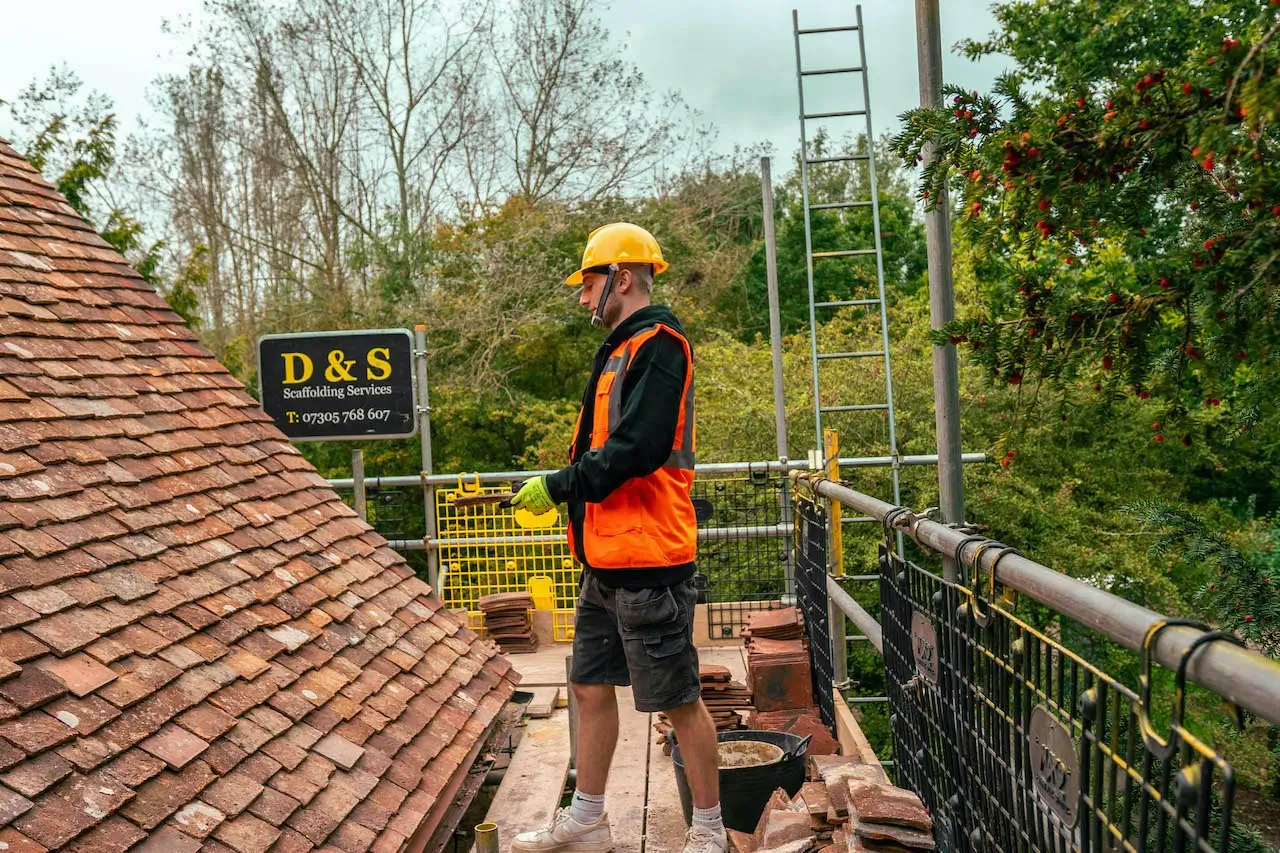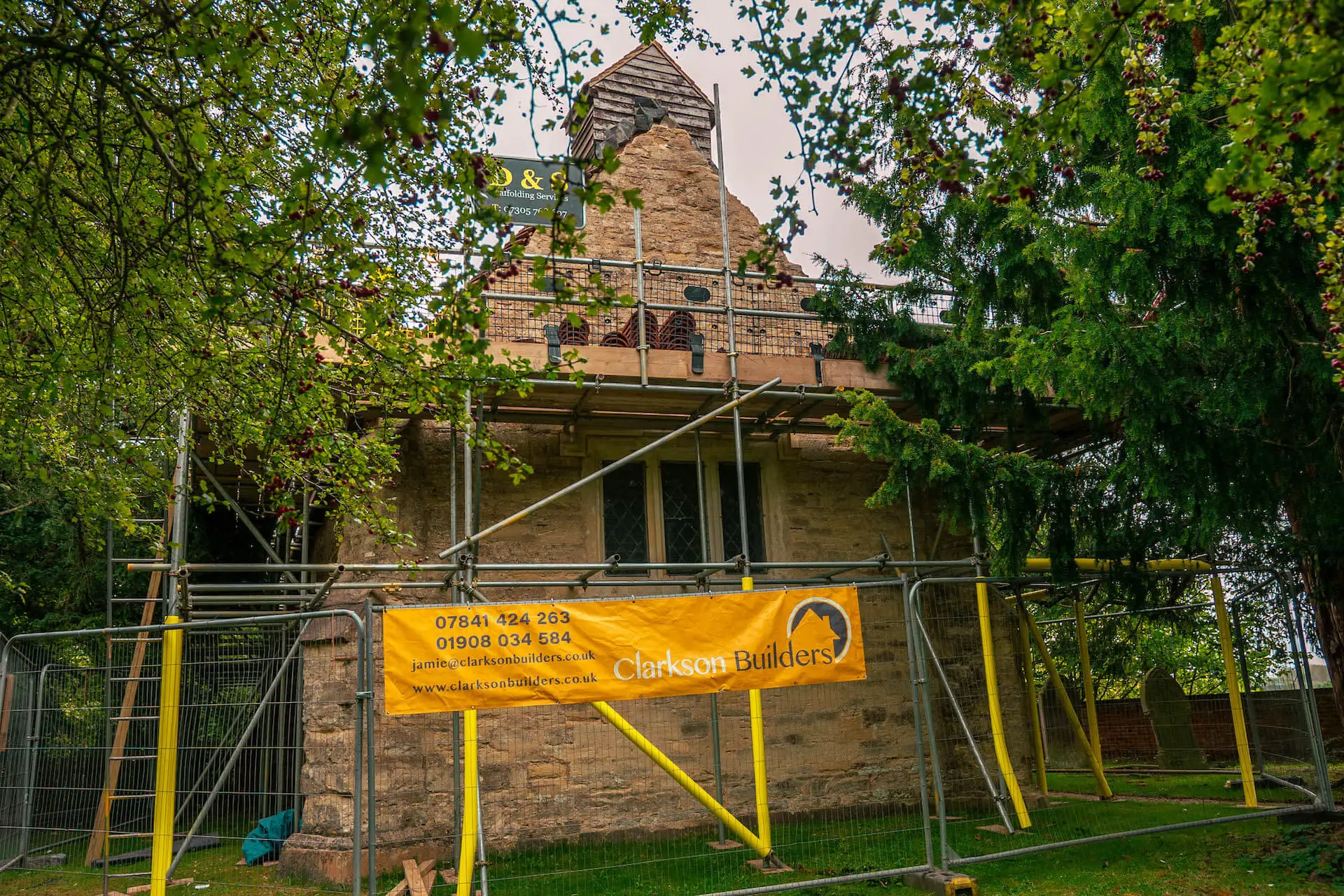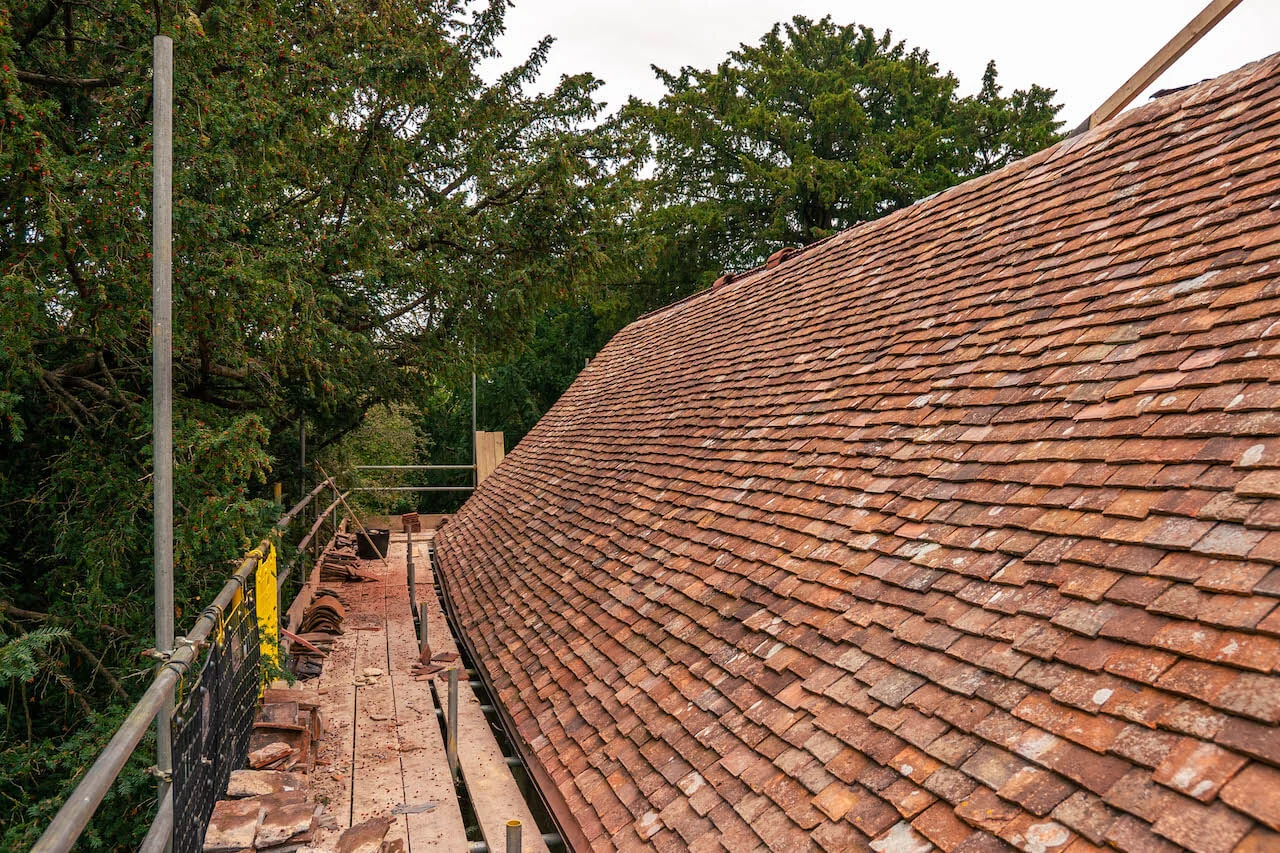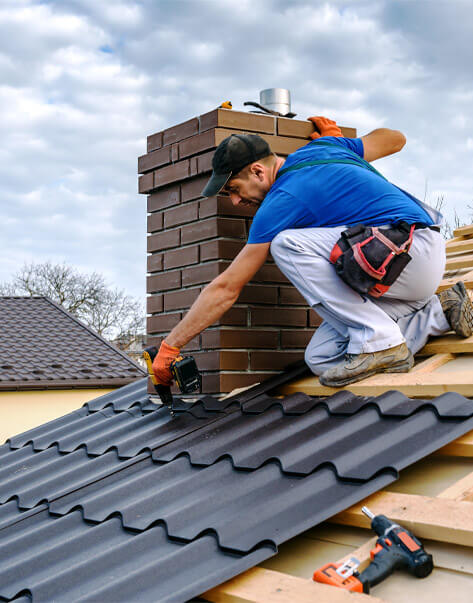
The thing about a good local roofer is that nobody knows about them. There's no enormous fleet of branded vans. There's no glossy spread in the regional newspaper. There's no advertising at the football. There is, instead, a quiet stream of recommendations passed between neighbours, between landlords, between landlord and tenant, between estate agent and homeowner. You should call the Clarksons. That's the firm we've been running, in one form or another, since the 1980s, and that quiet recommendation network is the only marketing strategy we've ever really had.
This piece is the first time we've sat down to write the company's story properly. We've never had a journal before. But our customers ask us the same questions often enough, about who we are, what we do, where we work and what to expect when they call, that it felt worth setting it all down in one place. Consider this a long introduction to a small family business.
From PA Roofing to Clarkson Roofing
We started life as PA Roofing the initials of a great-uncle who took a small roofing van out across north Buckinghamshire in the early 1980s and discovered, fairly quickly, that there was more honest local work than he could comfortably handle alone. Slate jobs in Newport Pagnell. Felt flat roofs across the early Milton Keynes estates. Chimney repointing on the period stone houses that line the villages around the Ouse Valley. Within a few years it was a family business in the literal sense: brothers, sons, and eventually grandsons, learning the trade properly through what is now an unfashionable apprenticeship, years on a real scaffold under the eye of a tradesman who'd been there twice as long.
The company renamed to Clarkson Roofing a few years ago to reflect the family name and the next generation taking on the day-to-day. The customers from the 1980s and 90s still occasionally call asking for "PA Roofing", and that's fine, it's the same crew, the same standards, and increasingly the children and grandchildren of those original clients calling us back to their own properties. Continuity matters in this trade. So does proof. The work we did in the 1980s is still on those rooftops. You can drive past it on a Saturday.
Where we work
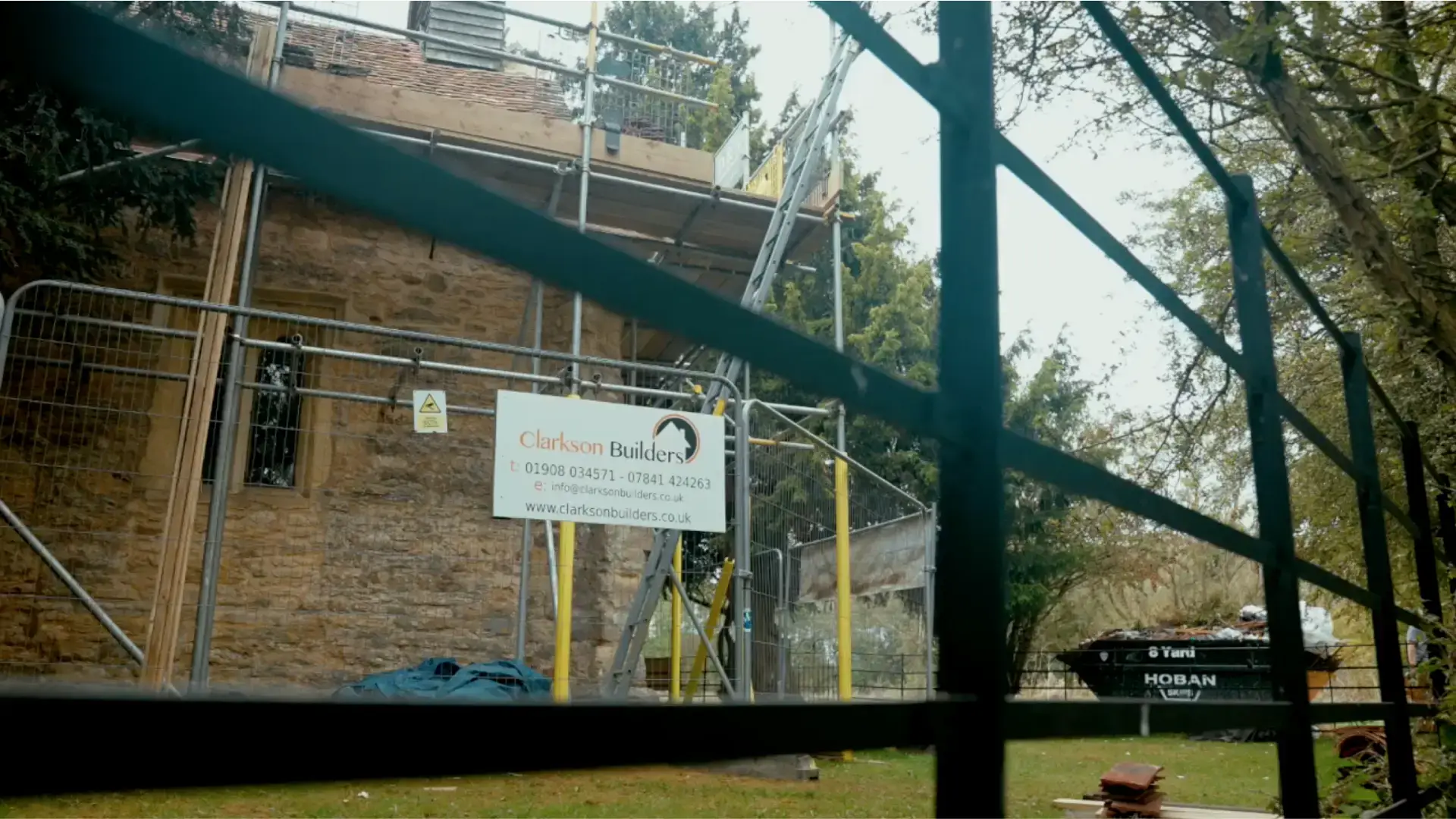
Our HQ sits at 15 The Grove, Newport Pagnell, MK16 0BL a few minutes from the M1 and within easy reach of every major town in the north Buckinghamshire / north Bedfordshire belt. That location was deliberate when we set up. Roofing is, more than almost any other building trade, a job where being nearby matters. It matters when a customer rings on a wet Tuesday night with a sudden leak. It matters when a homeowner needs a quick second opinion before agreeing to a quote elsewhere. It matters when the weather turns mid-project and we need crews on the property within the hour to sheet up.
So we've kept our coverage tight enough to actually be local. Our primary service area is Milton Keynes, Newport Pagnell and the immediate surrounding villages broadly within a half-hour drive of HQ. This is where we offer same-day or next-day visits for surveys, and within-the-hour response for genuine emergencies.
Our county coverage extends across Buckinghamshire, Bedfordshire, Northamptonshire and Oxfordshire. We're regularly working on properties in Bletchley, Bedford, Stony Stratford, Olney, Woburn, Cranfield, Towcester, Buckingham, Aylesbury, Brackley, Bicester and the Chiltern villages further south. The drive is a little further, the emergency response window stretches to a few hours rather than minutes, but the standard of the work is identical.
And occasionally, increasingly, in fact, we'll take on a project in Greater London by appointment, usually when a long-standing client moves to a new property or recommends us to a London friend. It's not our core patch, but it's where the family ends up sometimes, and we won't turn away an introduction.
One-hour reach for primary work · Same-county reach for projects
Newport Pagnell · Milton Keynes · Bletchley · Stony Stratford · Olney · Bedford · Cranfield · Woburn · Towcester · Buckingham · Aylesbury · Bicester · Brackley · Chiltern villages · selected London projects by appointment.
What "family-run" actually means in practice
It's the most overused phrase in the trade. Every roofing firm advertises themselves as family-run, and it usually means almost nothing, perhaps the founder is the owner-director and the rest of the operation runs like any other small business. We use the phrase only because the alternative would be misleading. Clarkson Roofing is family-run in the very specific sense that, when you ring us, you'll speak to a member of the family. When a surveyor turns up to look at your roof, it's the family. When the quote arrives in your inbox, the family has written it. When the crew turns up to do the work, the family is on the scaffold with them. When the job is signed off, a family member walks the roof with you.
That continuity is what we sell. There's no call centre. There's no project-manager handover. There's no "we'll get someone out to you", followed two weeks later by a stranger you've never spoken to. The person who quotes the job sees the job through. The person who walks your loft with a torch on the survey is the person who signs off the finished work.
In practical terms, this means a few things. It means we can be honest about scope without internal politics getting in the way, if the right answer is a repair rather than a replacement, we'll tell you, even though a replacement is worth ten times more to us. It means there's no subcontracted shortcut: we don't subcontract our work to other firms, ever, so what you see is what you get. And it means the standard is consistent. The family's reputation in this part of the country is the only thing we trade on, so the work has to hold up.
Our customers from the 1980s are still calling us. Increasingly it's their children calling us about their own roofs. That's the kind of business this is. from a recent client conversation
What we do
We're general roofing specialists, which is to say, we work across every major roof type used in the UK rather than concentrating on a single material. There's a reason for that. A typical Buckinghamshire street might have a Victorian end-of-terrace with original Welsh slate, a 1950s semi with concrete interlocking tiles, a 1980s commercial unit with a felt flat roof at the back, and a 2010 new-build with Marley clay tiles. Specialising in only one of those would mean turning down most of the work the area asks of us.
Our core services across pitched, flat and emergency work are:
- Full pitched re-roofs strip, re-felt, re-batten and re-tile. Slate, clay tile, concrete tile, plain and interlocking. Often paired with new lead flashing, new ridge tiles and an upgraded underlay system.
- Slate roofing traditional natural slate, reclaimed Welsh slate, sympathetic restorations on period property. Hand-graded, traditionally laid.
- Tile roofing clay and concrete interlocking systems for residential and commercial roofs.
- Flat roofing EPDM rubber single-ply, GRP fibreglass, and traditional felt overlays. Garage roofs, dormer roofs, side extensions, full commercial flat roofs.
- Chimney work repointing, lead flashing repair, masonry repairs, chimney reduction or removal.
- Gutters, fascias & soffits replacement, repair, rainwater management upgrades.
- Velux & roof windows new installations, replacements, and flashing repairs around existing units.
- Emergency repairs 24/7 call-out for sudden leaks, storm damage, unsafe roof sections. Property made watertight first; full repair scheduled after.
How we work
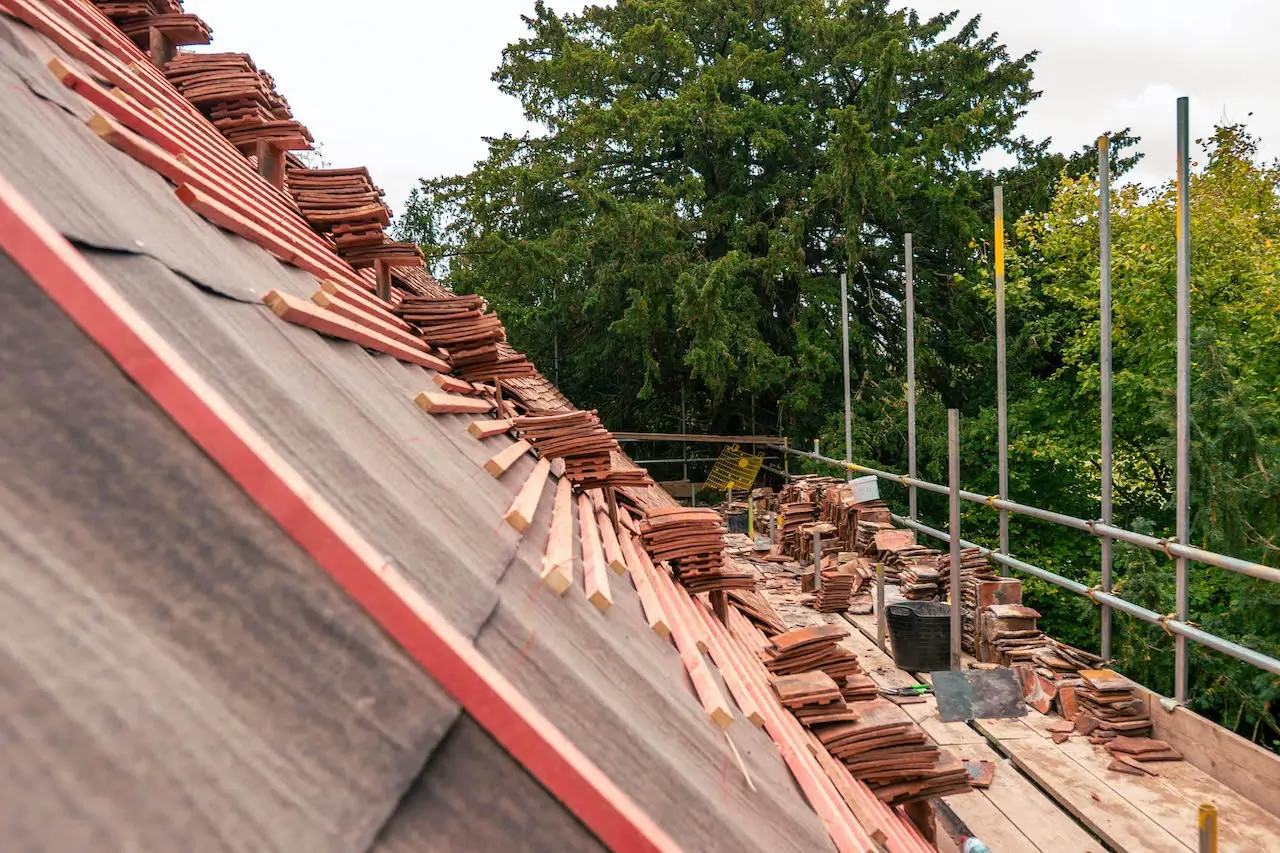
The process is the same whether you need a single tile re-bedded or a full property re-roofed.
- A free survey, no obligation. Phone us or email, the family will book you a survey within a few working days (sooner if it's urgent). The surveyor spends an hour or so on the property: walking the elevations, looking inside the loft, checking the joints around chimneys and valleys, photographing anything notable.
- An honest assessment. The survey ends with a plain-English conversation about what the roof actually needs. Repair vs. replacement. What's urgent vs. what can wait. What's worth doing properly vs. what's a false economy.
- A fixed-price, itemised quote in writing. No verbal estimates, no day-rate ambiguity. Everything is itemised: materials, labour, scaffold, waste removal, warranty period. What we quote is what you pay.
- Confirmed start and finish dates. We give realistic timelines and we hit them. If weather delays a job mid-flight, you'll know within the hour.
- A family sign-off. Before we invoice, a member of the family walks the roof and the property with you. If there's anything to put right, it gets put right before we leave.
If you'd like a sense of the standard before getting in touch, the Before, and after section on the main site shows four recent case studies, drag the slider on each to see the finished result.
Forty years on local rooftops, what we've learned
A few things you only really learn from spending four decades inspecting the same patch of England.
The first is that the housing stock in this part of the country is unusually varied. Newport Pagnell's old centre has stone-built cottages where the original roofs are now well into their second or third century. Milton Keynes has more 1970s and 1980s housing per square mile than almost any town in the UK much of it now reaching the natural end-of-life of its original tile and felt. The Buckinghamshire villages. Olney, Sherington, North Crawley, Lavendon, have everything from listed thatch (which we don't touch) to substantial Victorian rectories with complex lead-work detailing. Each calls for different materials, different techniques, different sympathies.
The second thing forty years teaches you is the local weather. Buckinghamshire isn't extreme by UK standards, but it has its patterns. South-westerly storms drive rain hard against west-facing pitches. The clay subsoil moves more than people realise, which can stress mortar joints around chimneys. Hard frosts after wet autumns are the classic moment when borderline tiles finally crack and slip. Knowing when in the year each kind of failure tends to show up lets us schedule surveys and repairs intelligently, a good roof's worst enemy is the next wet weekend after a borderline summer.
The third thing, and this is more cultural than technical, is that there is enormous pressure in the roofing trade to sell unnecessary work. National firms send teams door-to-door after storms. Online lead-generation businesses pass homeowner details to the highest-bidding contractor. There are roofers who will tell anyone with a damp patch that they need a complete re-roof. We don't operate that way and we never have. The closest we come to a marketing strategy is asking satisfied customers to mention us to one neighbour if a conversation comes up. That's worked for forty years and we don't plan to change it.
What happens next
If you're reading this because something on your roof is bothering you, a damp patch on a bedroom ceiling, a slipped tile spotted from the street, a quote from a national firm you'd like a second opinion on, the next step is the simplest part. Request a free survey from the contact page on the main site, or call 07497 711223 directly. If you'd like to read about whether your roof actually needs repair or replacement before getting in touch, our honest UK homeowner's guide is the place to start.
We'll see you on a scaffold soon.
Forty years of local roofing experience, one phone call away.
Common questions.
The questions we hear most often when customers call us for the first time.